Notes on TED Talks
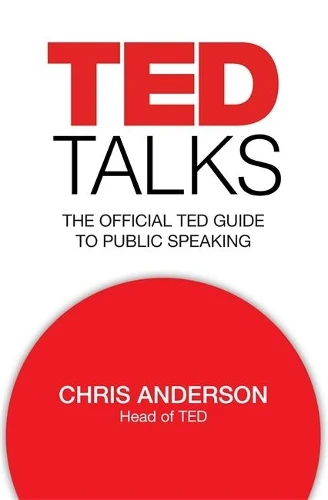
TED Talks: The Official TED Guide to Public Speaking by Chris Anderson
Original notes here.
A speech is like performing magic: vast amounts of information encoded as neural patterns in the speaker’s brain are copied and implanted into the brains of 1,200 listeners, potentially remaining there forever and influencing their future behavior
The author, who was called upon to take over TED in a crisis, spoke from the heart in his talk, saying that he felt he had been a tremendous failure, and that the only thing sustaining him psychologically was immersing himself in a world of ideas and inspiration—TED was that world
This talk turned TED’s fortunes around
After three failed rocket launches at SpaceX, Elon Musk gave a speech to his employees that turned the company’s fortunes around
Richard Turere, the boy who invented the lion lights, at first glance looked completely unsuitable as a speaker: timid and shy, not fluent in English, and unable to explain his invention concretely, but the story was so moving that the audience melted
Conversational sharing can also be moving; if you know how to talk to a group of friends over dinner, you already have enough ability to give a speech
Everyone’s personal experience is unique; among the seven billion people on Earth, you are 100 percent the only person who possesses yours, and many of the best talks are based simply on personal experience and one simple insight drawn from the story
A 2015 experiment by Princeton University psychologist Uri Hasson confirmed the extraordinary power of language: even when listeners merely heard an audio recording of someone recounting the film, their brain-response patterns matched those of volunteers who actually watched the film
Albert Mehrabian’s research report that claimed only 7% of communication effectiveness comes from words was an exploration of how emotions are communicated; even after he posted a bolded statement on his own website, many people still misunderstood the result
Give
A great talk should avoid selling and focus on giving, even if the true purpose of the talk is to sell
Rambling, pure performance, talking about your own company (when the audience cannot relate), and any content that offers no value will all receive poor reviews
Throughline
Designing the throughline is extremely important: it is the idea you want to install in the audience’s mind, and it should be compressible into fifteen English words, while containing an unexpected element, such as “More choices actually make us less happy”
TED talks have an upper limit of 18 minutes: short enough to hold attention, substantial enough to be taken seriously, and long enough to discuss something important
When asked how much time a speech should take to prepare, U.S. President Woodrow Wilson answered that it depended on the length: a ten-minute speech takes two weeks to prepare, a half-hour speech takes a week, and one with no time limit can be given at any time
Rushing through things is not a good way to make a speech concise: an insight may feel like the essence of the matter to you, but the audience may be unfamiliar with it
To make the content interesting, you must spend time filling out every point with examples and stories, giving it flesh and blood
One of the most popular TED speakers, Brené Brown, recommends drafting a talk and then cutting half of it, and then cutting half of what remains
Interviewees considered the author’s second version of his self-introduction—one that focused only on a single moment in his life and a single aspect of himself (the dreamer)—more inspiring and more interesting than the one that presented a formal summary
As of the time of writing the book, Ken Robinson, the most-viewed speaker, had a talk built largely around the simple structure of what, so what, now what
When dealing with cruel and tragic subjects, audiences have often heard too much and developed compassion fatigue; rather than a lesson-oriented, sermonizing approach (revealing the problem), use an idea-oriented approach driven by curiosity (offering the answer). The former feels like a demand, the latter like a gift
Writer Elizabeth Gilbert recommends preparing a talk for one audience member rather than a crowd, and choosing a subject to which you have devoted yourself passionately over many years
Connect with the Audience
Humans are not computers. Without first establishing a connection with the audience, even the most brilliant content cannot enter their hearts
Research shows that merely looking at one another can trigger activity in mirror neurons, creating a sense of shared experience
The speaker of a talk on stress begins by gently drawing the audience in, asking them to honestly tell him whether they have felt even a little stressed in the past year; a few relaxed, natural gestures immediately establish a connection with the audience
Authentically showing yourself, including revealing vulnerability, is one of the best ways to get an audience to lower its defenses, but it must not be overdone, and you must first understand yourself; the one thing you should never reveal is self-importance, unless humor is used skillfully to soften it
Outstanding speakers can use humor to create a powerful connection, making the audience feel that the speaker is so charismatic that they are willing to let their thoughts follow him anywhere; but there are also counterexamples, such as speakers who try to imitate the original speaker’s accent when quoting them, or speakers who go on at length about embarrassing stories involving their ex-wife; religious, gender, and racial issues are especially taboo
Tribal thinking, including political disagreement, is the greatest killer of connection. Take Gore as an example: half of America connected with him more deeply than ever and embraced the documentary he made, permanently changing their worldview; the other half of America simply shut him out because he was a politician
A million years ago, fire fostered social connection: our ancestors gathered around campfires, talking and discussing things during the day, and singing, dancing, and telling stories at night
A great story: when I was eight, I went fishing with my father. On the small boat, my father said, “Son, do you trust me?” After I nodded, my father threw me overboard. I struggled, and my father also jumped into the sea and held me tightly. In the end, a helicopter rescued us. It turned out that my father knew the boat was about to overturn, and that it would be better to throw me into the sea. I learned the true meaning of trust
Another version of the story reveals the father’s intention too early, does not describe what the child felt at the time, contains many irrelevant details, and never states the key sentence of the whole story
This shows the importance of narrative structure
Even a highly engaging anecdote, without a core idea to wrap all the narrative around, may be enough reason to reject a talk proposal
Explain
The process of explaining complex concepts, using Harvard psychologist Daniel Gilbert’s talk on synthetic happiness as an example
Start from the present: when you have 21 minutes to speak, two million years seems like a very long time…
Spark curiosity: why did nature so urgently require us to have a brain three times larger? It turns out there was a structural change, giving us a new prefrontal cortex
Introduce a new concept: this new structure gives us an experience simulator, so that simply by sitting there and imagining it, we can know that liver-and-onion ice cream tastes awful, without having to make it
It turns out that one year after winning the lottery or one year after becoming paralyzed from the waist down, the two groups are actually equally happy (creating a knowledge gap); this phenomenon is “impact bias”…
Analogy: the experience simulator is a little like a flight simulator… happiness can be synthesized, just like a “psychological immune system”
Examples: years after resigning from office amid a scandal, legislators say that in many respects they are actually happier; a person who spent 37 years wrongfully imprisoned says after his release that the prison experience was extremely enjoyable…
After hearing his explanation, our mental model of the world has been upgraded: richer, deeper, more accurate, and more reflective of reality
Cognitive psychology has found that long-term memory in the brain depends on content with a clear hierarchical structure, so speakers should convey hierarchically structured concepts one sentence at a time
When building a sentence-by-sentence progression, pay attention to relevance, causal relationships, and emphasis, and avoid Robin Hogarth’s curse of knowledge: because you understand something yourself, you take it for granted that everyone else understands it too
The best explainers provide only enough explanation to make people feel that they themselves have pieced the concept together and understood it
First explain what a concept is not, ruling out seemingly plausible possibilities
Bonnie Bassler’s talk on how bacteria communicate begins by making the audience feel that bacteria are directly relevant to us: it turns out that the number of bacterial cells in a person’s body is ten times the number of human cells… they are intimately connected to sustaining life
Spark curiosity: how do they do all kinds of good and bad things? We often imagine that these tiny organisms live boring lives of nothing but growth and division, unsociable and solitary…
New concept: pathogens cannot attack the human body alone. Only when they suddenly realize that together they are present in sufficient numbers do they begin secreting toxins that cause disease; this is “quorum sensing”
Example: the bioluminescence of the Hawaiian bobtail squid is also a collective light display produced by bacteria inside its body
The above discovery shows that we do not need to kill bacteria to fight them; we only need to cut off their communication channels
Conclusion: this may be the origin of multicellularity. The rules governing the operation of multicellular tissues were established by bacteria, and this knowledge can be applied to other human diseases and human behavior
Every section of the talk is carefully built on the foundation of what came before, and every term is thoroughly explained in a gradual progression
Persuade
Persuading an audience requires a clear argumentative structure, and reductio ad absurdum can also work well
Intuitive metaphors are often highly effective, such as Daniel Dennett’s example of buying jeans when discussing how more choices lead to unhappiness
Turn the audience into detectives, transforming the subject to be argued into a detective story; this is a highly compelling persuasive technique
A solid argument may not have an immediate effect. It is not a fast-growing weed but a deeply rooted oak tree, yet once it has grown, it can permanently alter the landscape
Reveal
You can present your work in the form of a “Wonder Walk”, with a single theme running throughout and language that is warm and easy to understand
Lively demonstrations, such as inventor Michael Pritchard having the author drink from a life-saving water bottle filled with water filtered through it
Make good use of dreams and visions to vividly sketch possible futures: Martin Luther King’s speech at the Lincoln Memorial, and Kennedy’s speech when promoting the plan to land on the moon
Visuals
No slides at all are better than bad slides
Traditional slides filled with a great deal of text are absolutely the easiest format for making audiences lose attention, and by the time the speaker gets to a particular point, there is already no freshness left
Each point should instead become an independent slide, reduced to one sentence or one image
Three presentation programs: PowerPoint, Keynote, Prezi
It is recommended to start making a presentation from a blank slide
Most photographs should be displayed full-screen; otherwise, use a black background
Use a single font, at 24 points or larger
Avoid underlining, italics, em dashes, and bullet points
Embedded videos should be no more than 30 seconds long, and there should be no more than four of them
Unless for humor or satire, avoid almost all transition effects; tricks only divert the eye
Script
Speakers can write an outline in advance, or write out the entire script, depending on which feels more comfortable
If you have a complete script, you should make the talk sound as though it was not written in advance, using it as a reference rather than reading it verbatim
Reading a script is like watching a recorded sporting event: the outcome has already been decided, and even if the audience does not know it, the excitement is far less than in a live broadcast seen for the first time
Reading or memorizing a script makes you focus on recalling the correct sentences rather than on giving those sentences actual meaning
The stages experienced by someone memorizing a talk: at first, energetic but disorganized, because it has not yet been memorized; the middle is the uncanny valley, with structure but lacking vitality, a feeling of tension, somewhat mechanical
Finally, you cross the uncanny valley and discover an exhilarating change: because you have mastered the material, you can go fast or slow, smoothly and naturally
A speaker memorizing a script must cross the uncanny valley; once you are fluent, you can do something else while giving the talk
Do not use slides as a supporting crutch; suggesting what is about to appear before showing the slide is clearly better
Some speakers firmly believe in memorizing the script, while others favor improvisation. Daniel Gilbert advocates blending improvisation with memorization, like jazz: there is a score, but in the middle the musicians will always depart from the script, and they will always return to the original track
The author reassures readers who do not know how to choose, saying that the difference between the two approaches fades with rehearsal
Rehearsal
A small number of speakers, through a lifetime of experience and an ability to actively construct content and focus on the live setting, may be able to perform brilliantly on the spot
Most people pay terrible prices in the form of losing focus, missing key points, lacking clarity, and running over time
Even speakers who do not believe in the need to write a script in advance emphasize the importance of rehearsal very strongly
One of the busiest people in the world, Bill Gates, also puts a great deal of effort into rehearsing for a TED talk
Spoken-word poet Rives: the content of a talk should take up 90 percent of the available time
Opening
The audience’s attention is extremely precious; every piece of content is part of the battle for that attention
The phones in their pockets and the fatigue of modern life are lethal enemies, able at any moment to make the audience zone out and lose focus
A good opening is one of the most important weapons for determining the outcome of this battle
Examples of dramatic openings:
Unfortunately, over the next 18 minutes, four Americans are going to die because of the food they eat
In 1990, Nosair assassinated the head of the Jewish Defense League; he was acquitted of the murder but eventually convicted of participating in the 1993 World Trade Center bombing. Nosair is my father
As American children grow into adulthood, two institutions play supervisory roles. One is college, expensive and debt-inducing but still pretty good. Today I want to talk about another institution. That institution is prison
Spark curiosity, creating a knowledge gap instantly
For example: when a group of animals congregates, it is usually for hunting, courtship, or reproduction. These explanations are generally correct, but they rest on one major assumption: that animals can control their own behavior and command their own bodies. Usually that is not correct. There is a species of shrimp that normally lives alone; it gathers in large numbers for only one reason: its brain has been occupied by a parasite that needs the shrimp to be eaten by flamingos so that the parasite can continue its life cycle… (Ed Yong)
What role should money and markets play in society? Today there are few things money cannot buy. If you were in a certain prison, you could pay to upgrade your cell. How much? $82 (Michael Sandel)
A spectacular, striking, or interesting photograph or video can also be used as an opening
Hint rather than reveal the key: I want to reveal what I believe is the key to entrepreneurial success, and how everyone here can cultivate it; you will be able to spot the clues in what I say
Just as the author’s parents, when he was six, stopped saying “Let’s go hiking” and instead said, “Let’s go somewhere very special, where you can launch a paper airplane five miles across an open space”
Closing
Bad endings include unnecessary thanks, complaining about not having enough time, and clichés
Seven powerful endings
Bigger picture: a larger view, a broader range of possibilities
Call to action
Personal commitment: at the end of this talk, I want to make a decision here. I intend to explain this expedition (Bill Stone)
Values and vision: every child deserves an advocate, someone who will never give up on them, understands the power of relationships, and insists on encouraging them to do the best they can. Is that hard? Of course. But we can do it. We are educators, born to change this world (Rita Pierson)
Full-circle closure: reframe the argument cleanly in a new way
I look at infidelity from two dimensions: one is hurt and betrayal, the other is growth and self-exploration. Your first marriage has ended. Do you want to create a second marriage together? (Esther Perel)
Narrative symmetry, echoing the opening
Poetic inspiration: use lyrical, poetic language to reach people deeply. It should not be attempted lightly; only when the speaker has clearly earned the right to evoke such an emotion is this kind of ending appropriate
Attire
TED originally strictly prohibited speakers from wearing ties. Co-founder Richard Wurman once cut off a speaker’s tie for violating the rule, but later the rule was no longer enforced rigidly; what matters most is that the speaker feels comfortable
Mental Preparation
As the day of the talk approached, Lewinsky was extremely nervous. Her methods were: returning to harmonized breathing, using a mantra for coping with anxiety, resonance audio therapy, emotional-release techniques, chanting, warm-up exercises, walking, grounding visualization, and high-power poses
Everyone is different. You do not need to use all of her methods, but this fact should be encouragement enough that anyone can do it
The author recommends: use fear as a motivating force, breathe deeply, drink water, avoid an empty stomach, remember the power of vulnerability, find someone in the audience who resonates with you, focus on the content and message rather than yourself, prepare backup plans (what to say when a technical failure adds several minutes, and notes to refer to if you forget your words)
Singer Joe Kowan wrote a stage-fright song to overcome his severe fear of performing, and whenever he gets stage fright, he performs that song
Setup
The first kind of setup: the speaker stands behind a large, cumbersome lectern, separating himself from the audience
The second kind of setup: the speaker stands on a small stage surrounded on three sides by the audience, with no barrier at all
The former may make the speaker feel comfortable and at ease, with everything needed at hand; it does not even matter if you forgot to polish your shoes
But if the speaker lowers his defenses and does not hide his vulnerability, the audience will also lower theirs in return
It is good for the speaker to step outside the comfort zone, but overcorrecting can backfire, so allowing the speaker to express himself in the most natural way is more important than maximizing vulnerability
No barrier, with only cue cards, is the gold-standard mode and the one most likely to connect with the audience
Keep the full notes or script nearby, so that you can check them if you forget your words
More upscale speaking venues will place a confidence monitor within your field of vision. Some are above the audience’s heads, others are on the floor; but they are not foolproof. Some speakers get confused between the current slide and the next slide; others become too dependent on constant reference, which is worse than looking down at notes
The author has only seen one person use a confidence monitor well: he used his peripheral vision to glance at the screen while maintaining a great deal of eye contact with the audience, but he noticed that audience members who noticed him looking at the confidence monitor still felt disappointed
Modern teleprompters project text onto a screen that the audience cannot see but that faces the speaker’s line of sight
The fatal weakness is that you may signal to the audience: I am pretending to look at you, but actually I am reading the script
Lewinsky’s unprecedented approach: putting her notes on a music stand, rarely looking down at them during the talk, but significantly increasing her confidence
Tone and Body Language
The fundamental question: why give a talk at all? Why not just send an email and save the cost of the lecture hall?
When the author was in his twenties, he could not understand the benefits of giving talks. While studying philosophy at university, he found that philosophers with profound ideas were terrible speakers. Attending their classes was a complete waste of time; it would be better simply to read their works. So he stopped attending any lectures and only read
Today he promotes speaking so strongly because a talk adds a human layer: it turns information into inspiration
When the brain processes information, it makes you assess what action you should take in response to every sentence you hear, and what the priorities should be; when reading, the brain does not process it in this way
The subtle differences among different levels of intonation cannot be conveyed or given by printed type
A speech coach mentioned six tools that can be used: volume, pitch, pace, timbre, tone, and breath/pause/rhythm
For a deeper understanding, recommended: Julian Treasure’s TED talk: how to speak so that people want to listen
The most important thing is to inject variation into the way you speak. You can try marking changes in tone in the script, then recording yourself and listening closely with your eyes closed
If the intonation changes recommended by a speech coach feel unsuitable for you, do not accept them; use natural, authentic intonation that comes out when you feel passion
When explaining important concepts, slow down. Do not be afraid to add pauses; less important material can be delivered faster
Generally speaking, comprehension is faster than explanation, so you may end up speaking too slowly; one advertising grandmaster also pointed out that fast beats slow, and speaking a little faster can conceal many flaws
In the past, there were important speeches delivered in what is now called the oration form, but its art is difficult to master. Only a very small number can be called truly exquisite, and it may perhaps be appropriate only in churches or large-scale political rally settings
Ken Robinson joked that some professors seem to regard their bodies simply as equipment for carrying their brains to the next meeting
The simplest posture for a powerful talk is simply to stand confidently
But there are no fixed rules. Some speakers choose to sit and are relaxed and natural, while others jump around the stage full of energy
Use your own style; trying to imitate others will only make you dull, vulgar, and outdated
Innovative Forms
Innovative tools for supporting a talk: a dance troupe, dry beans used to simulate nuclear weapons (first one bean, then a generation of them), a real human brain connected to a spinal cord, Bill Gates opening a can of mosquitoes, the author also once used a Burmese python, food cooked live on stage, handing the audience 3D glasses or samples they can taste, musical accompaniment, using slides sentence by sentence as a visual tool like Lawrence Lessig (requiring extreme attention to detail and timing; do not imitate blindly)
A radio host simply took on the role of a DJ during the talk
The finest visual artists believe that if they are invited to give a talk, they must speak, without thinking about how to immerse the audience in the work; they hope that in the future there will be less talking and more showing
In 2014, BeamPro telepresence robot, was used to let Snowden attend a TED conference virtually; during the break, participants could even chat and take photos with the Snowden robot
Many innovations work well, but they should not be overused. The basic technology of human beings talking to one another dates back hundreds of thousands of years. Be careful not to throw the baby out with the bathwater
The Revival of Public Speaking
No matter how important speaking is now, it will only become more important in the future
When TED was founded in 1984, Richard Wurman and Harry Marks believed that technology, entertainment, and design (TED) were becoming increasingly convergent, creating countless possibilities
After a stumbling start, because of conflicts between the two founders’ personalities, Harry sold his half of the shares to Richard for one dollar. Lacking patience, Richard kept making the talks shorter. Even the occasional boring talk could be endured; on the second day of the conference, the author began to appreciate this short-talk format; on the third day, his overly excited brain started sparking, like a storm full of lightning; after watching the talk by Aimee Mullins, who had had both lower legs amputated since childhood, he felt a higher level of possibility he had never experienced before
Two years later, when he heard that Richard wanted to sell the conference, he felt a strong urge to buy it
Following other people’s passion is the author’s motto. Seeing what people are deeply passionate about is a major clue to where opportunities lie; passion contains latent business opportunities. This was also how I founded dozens of magazines for people with different interests
But because I had never been exposed to this field, I was taking it over from someone more forceful and impatient than I was. If I failed, it would be an enormous humiliation. I tossed and turned at night, unable to decide
What finally persuaded the author to take over the business was a book, The Fabric of Reality, which pointed out that specialization of knowledge cannot bring understanding, just as focusing on any single point of a spider web cannot help you understand its surrounding context
Reading this, I felt a light bulb go on: the TED experience was so exhilarating because all knowledge is connected and intertwined into one giant web
Our assumptions about the value of knowledge are still relics of the industrial age: the success of a country or a company depends on developing a solid specialization in producing physical things, and that requires deep expertise
The knowledge economy needs something different. Expertise once exercised by humans is increasingly being taken over by computers: oil exploration is no longer performed by geologists, but by computer software that analyzes huge amounts of geological data and identifies patterns; every industry is being affected
IBM’s Watson computer took only a few seconds to read 4,000 relevant medical papers and then reached a diagnostic conclusion with 80 percent certainty; only one doctor present had ever heard of the disease
What can humans do? Humans can be more human than ever, with more systems designed for strategic thinking, more innovation and creativity, greater use of uniquely human values, and more human interaction across industries
This requires knowledge of context, creative knowledge, and a deeper understanding of our own humanity. More than that, it requires an era in which people spend time learning from one another. This is one of the main engines driving the speaking revival movement
How should we do it? Whatever your specialty, I do not need to learn, nor can I learn, everything you know. What I need to know is how your work connects with other things, so that I can expand my worldview and make other contributions
More Insights
The author bought TED through a nonprofit foundation, so TED became a nonprofit organization, and various public-interest programs were launched as experiments
He once tried to break into television but was rejected. Then the internet rose and the audience grew dramatically, while the feedback also brought more people to the physical conferences
In the past, ambitious speakers had to spend years touring the country, giving 100 talks a year to 500 people each time, reaching only 50,000 people in a year; today, more than a thousand speakers can each reach over a million listeners with a single talk
For the first time in human history, anyone on Earth can use the internet to invite the world’s best teachers and inspirers into their homes. This phenomenon needs a name; I call it crowd-accelerated innovation
For this reason, beginning in 2009, we began offering free licenses to people who wanted to hold TED-like talks in their own towns, calling them TEDx; we also used the OpenTED program to encourage anyone to upload their own TED-style talks, along with programs to develop children’s speaking abilities
Over to You
Daniel Dennett: the secret to happiness is to find something more important than yourself and devote your life to it
Ultimately, people are not satisfied with the level of simply seeking pleasure. The best therapy is to step off the hedonic treadmill and begin pursuing ideas that matter more
In genuinely pursuing this, you discover a more meaningful form of happiness, and something more important than everything recommended in this book: something worth saying; then you must share it with all your passion and the best possible technique, igniting the flame of this new wisdom
The author hopes for a future in which everyone recognizes that they can gently move the world, and that the most important impact a person can make is to plant seeds of valuable ideas
Speeches that harm others are always aimed at specific groups, conceal important truths, and create division
Once full transparency is achieved, appealing to all humanity will inevitably have a broader impact than appealing to specific groups
Martin Luther King: the moral arc of the universe is long, but it inevitably bends toward justice
The chapters of the future have not yet been written; we are writing them together
Finished reading on June 18, 2020