Notes on Way of the Wolf
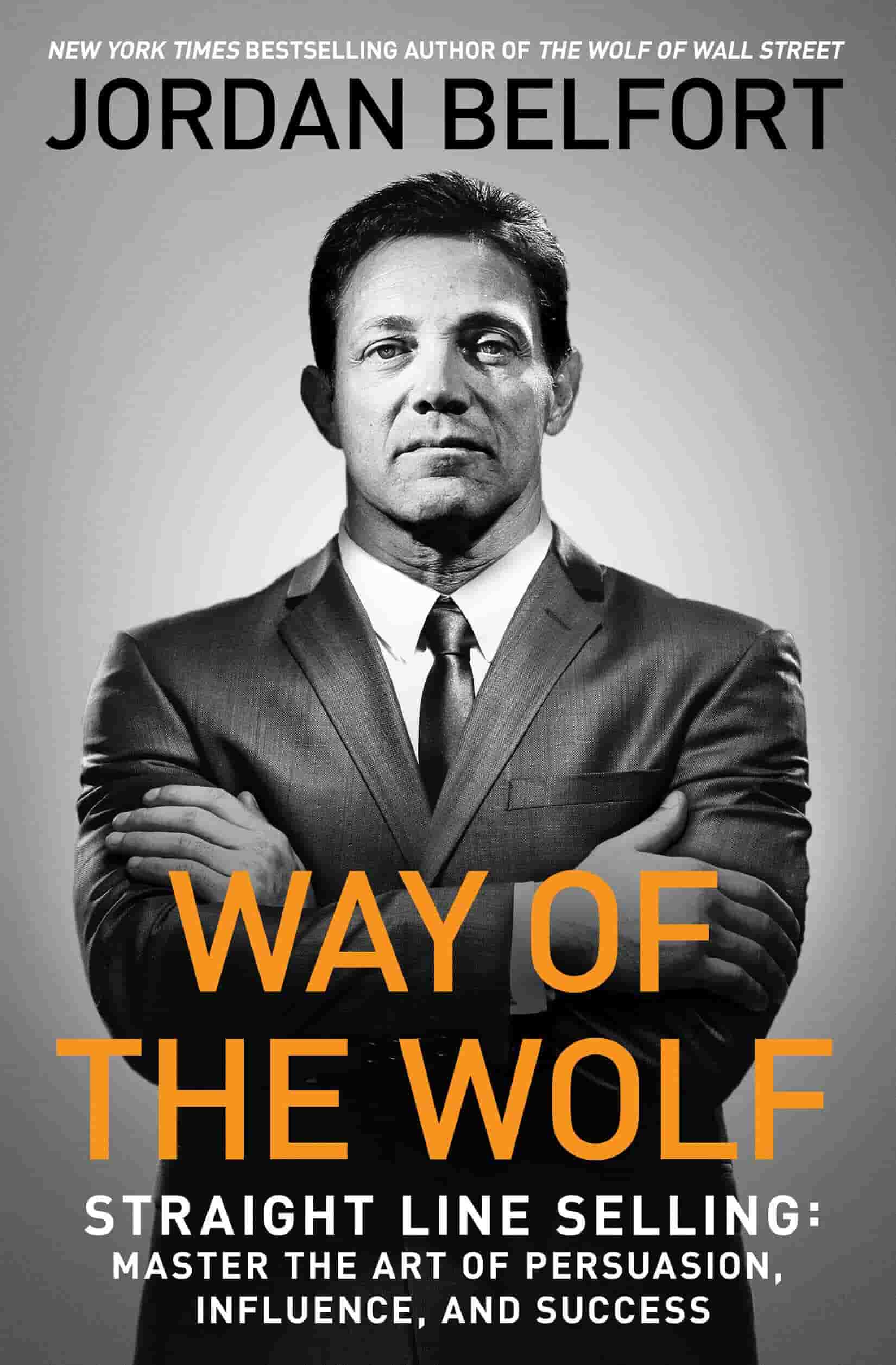
Way of the Wolf: straight line selling: master the art of persuasion, influence, and success by Jordan Belfort
Original notes here.
The author is the real-life person on whom the protagonist of The Wolf of Wall Street is based. He invented the Straight Line persuasion system for sales, which can transform anyone into a world-class salesperson. He once lost everything through a misuse of the system.
After former employees left and achieved remarkable results using diluted versions of it, the author decided to promote the system. Before doing so, he spent another two years reviewing it line by line to ensure that every detail met the highest ethical standards, and invited world-class experts to scrutinize every aspect, turning it into a force for making money through benevolence.
Even if you do not work in sales, selling is still everything in life: you are either selling or fading away, living a life without autonomy; the sophisticated art of communication allows you to increase your power and autonomy.
The Five Codes of Closing
In 1988, faced with a group of wealthy employees who could not sell, the author pointed out that “every sales is the same.” He was about to invent the prototype of the system.
No matter what the customer’s objection is (everything is merely an excuse for gracefully exiting the sale), whether the customer buys depends on the degree of certainty in three major factors (in the order in which you should intend to create certainty):
The product (or idea)
Their trust in you
Their trust in your company
These can be represented on a scale from one to ten, from absolutely uncertain to absolutely certain, called the “10-point scale.”
A five on the product means you may as well have “please influence me immediately” written across your chest.
Selling is the process of increasing the score.
Certainty comes in two forms: logical (facts, numbers, performance, benefits) and emotional (connected to painting a picture of the future, allowing them to see and feel how satisfied they will be after making the purchase and using it).
In terms of sequence, first build airtight, logical reasoning that satisfies the other person’s bullshit detector, then build airtight reasoning that appeals to their rationality.
A salesperson should not try to turn a “no” into a “yes” (the person should be eliminated as quickly as possible), but rather turn “let me think about it” into a “yes.”
While facing the 14 objections presented by a group of employees, the author had a flash of the concept of Straight Line Selling.
The sales process is like a straight line. The salesperson must control the process, taking the customer from the starting point to the endpoint, establishing certainty on each 10-point scale and closing the sale.
The farther you move from the straight line, the more you enter the danger zone of losing control, which must be avoided. Only beginners fly off into outer space; experts’ time is too valuable.
If you deviate but remain around the perimeter, collect useful information (needs; their philosophy concerning buying and accepting a sale; similar experiences; values; financial means; pain points; liquidity) and build rapport.
At about one-third of the way to the endpoint, you will encounter the first objection. Using the simple “looping” strategy is extremely effective; after two or three loops, you can bring them to absolute certainty on all three factors, at which point you can hear it in their tone of voice.
The concrete operating steps grew from eight to fourteen, but the core Straight Line structure was almost exactly the same as when he had thought of it that night.
After explaining the system to the employees, they all became million-dollar salespeople within the first 90 days; by the end of the year, the top salespeople were making more than $250,000 a month, while average monthly income had also risen to $100,000, and turnover was roughly zero.
Even when the three core factors are absolutely certain and the customer still does not buy, that is because of the fourth and fifth elements:
The action threshold (malleable rather than fixed)
The pain threshold (the most powerful of all motivational factors; save it for last, and you can use it for the final push)
The five factors are like five combination locks. This book cannot crack every combination lock, but it can enable you to make deals with everyone who is capable of transacting, rather than failing because you are not good enough or because you are not the author.
If the system is missing one of these crucial factors, you have to surrender: you must immediately take control of the sales process.
And you have only four seconds.
The Critical Four Seconds
In the first four seconds of contact, you must demonstrate three things about yourself:
That you are highly intelligent
That you are extremely enthusiastic
That you are an expert in the industry
In 2013, a Harvard professor published a study on the importance of first impressions and found that it was actually not four seconds but five. He apologized to everyone for being off by one second.
The study also found that it later takes eight positive impressions to erase the effect of a bad first impression.
Once these three things are established, the customer will be willing to give you time to speak, because people like you will:
Get to the point quickly
Not waste time
Solve problems
Become a long-term asset to the customer
That is: help them achieve their goals and get the things they want in life.
What if you are speaking by phone? The key is tonality; words account for only about one-tenth of communication.
There are 29 tonalities humans use in communication, but only ten have a powerful impact.
The system integrates countless patterns of body language into ten core principles.
It is not difficult. You have certainly experienced speaking in a certain tonality yourself, or whispering a secret to someone; it contains an understated enthusiasm that strongly affects the emotions of others.
Anchoring a Peak State
The system transformed the salespeople under the author’s command enormously, including the way they spoke, dressed, shook hands, and walked—and all of this happened before they even started making big money.
This was because the author taught them to imagine the future: imagine that you are already a wealthy person in the way you speak, behave, and think. This is called state management.
Even the best parent can walk through the front door filled with anger and in a disempowered state, and will absolutely be unable to perform well.
Being able to trigger an upward, peak state is extremely important, but maintaining it at all times is unnecessary. You only need to use it at important moments: when beginning a sales contact, trying to close a deal, entering the negotiation stage, and when you need to make a major decision in your personal life.
The four major elements of state are: certainty, clarity, confidence, and courage.
To anchor a perfect peak state, five steps:
- Choose a state of absolute certainty
- Choose the content focus (major achievements, your best moments, as they should appear in a movie)
- Choose your physiology (posture, mannerisms, even breathing)
- Intensify it (the five senses: sight, hearing, touch, taste, smell; use imagery to make it more emotionally powerful and vivid, like a bright, detailed film)
- Anchor it (like the bell for Pavlov’s experimental dogs: at the first contact, you enter the state)
After many attempts, the author found the perfect anchor: nasal inhaler.
Procedure: use it every time at the peak moment, spray the stink, then clench your fist and shout “well done” internally to your organs; repeat ten seconds later.
Keep reinforcing it this way every time, and this ridiculous method can save you the above steps two through four.
Ten Powerful Tonalities
This subconscious communication strategy is extraordinarily powerful and requires readers to sign an ethical declaration.
Used correctly, it can shift the customer’s inner monologue in a favorable direction.
When making a cold call, opening with a formal self-introduction will only make the other person guarded.
The correct demonstration is as follows.
The tonality of “I’m extremely positive, I care, I genuinely want to know”: Hi, is Little Zhang there? (Creates a subconscious psychological connection, leading them to think, “This person genuinely cares about my well-being.”)
The tonality of “stating a question”: My name is Li Si, I’m calling from TopGood Travel, our company is in Beverly Hills, California, how are you today? (The first three sentences are declarative, but they are delivered with question tonality, creating the impression: “This person is warm and friendly, like someone I have met before,” just like a little girl saying to her father, “Daddy, we’re going to the toy store, right? You said we were, right?”)
The “mysterious and alluring tonality”: Little Zhang, I’m calling you today because we’ve been in contact with a select group of property owners in your area, and we’re preparing to offer them… (A little louder than a whisper; slightly stretch the word “reason,” making the reason feel mysterious, urgent, and scarce.)
The “scarcity tonality”: (Lower your voice to a level just above a whisper, then add a little force; informational scarcity is more sophisticated than verbal scarcity and can be incorporated into the content.)
Jumping to the closing stage: “If you give me a chance, Little Zhang, trust me, you’re going to be very, very excited about this. That sounds fair, right?” This sentence must still be delivered using three different tonalities in combination.
The “absolute certainty tonality”: Just give me a chance, Little Zhang, trust me (explained in the previous chapter; call up the memory). This tonality makes the voice firmer and more definite, with power coming from deep within the chest and absolute confidence.
The “total sincerity tonality”: You’re going to be very, very excited (make it velvety smooth and humble, almost like an apology but with virtually no apologetic meaning; instead, you are telling them what is most beneficial for them, and anyone who does not believe it must be a fool).
The “Reasonable Man” tonality: That sounds fair, right? (This should also appear when asking the other person to let you explain, such as “If you have one minute, I’d like to share the old story with you; do you have one minute?” This tonality implies that what you are saying is very reasonable, conveying, “I’m reasonable, you’re reasonable, this is a reasonable request,” so the other person’s subconscious will feel obliged to respond to reason with reason.)
The “Money-Aside” tonality: (Customer: I’ll think about it.) I hear what you’re saying, but let me ask you one question: do you think this idea makes sense? Do you like it? (Turn it into an academic exercise, disarming the other person; the implication is “assume money has nothing to do with it.”)
The “Implied Obviousness” tonality: Oh, Little Zhang, you’re going to make money from this, but more importantly, I’ll be able to serve you over the long term in IPOs and arbitrage operations. (Suggest that what you are saying is blatantly obvious.)
The “I feel your pain” tonality: (Identify the other person’s pain point, and when necessary to amplify it, use this tonality.)
See examples of the tonalities at:
www.jordonbelfort.com/tonality
Advanced Body Language
Truly unpleasant people all have extremely poor body language that makes others recoil and never want to deal with them for the rest of their lives.
Package yourself well: women’s makeup, jewelry, and perfume should be neither too much nor too little; men who are not involved in casino jewelry should not wear a pink ring; clothing should suit the setting.
People of the same sex should stand at a slight angle to reduce confrontation and create a non-hostile feeling; with the opposite sex, you should stand directly in front of the other person.
Use a cooperative handshake, without continually increasing the pressure.
Maintain eye contact for 72% of the time. Too little, and others will not trust you; too much, and you risk getting into a staring contest.
When the other person talks about something important: look directly into their eyes, slightly squint your own eyes, pull your mouth to one side, occasionally nod, and say, “Ah, yes, I understand.”
When discussing the other person’s pain point, showing sadness, sympathy, and empathy: squint your eyes less, purse your lips tightly, lower your head slightly, and nod slowly.
Emotional questions: lean your body forward, and continue leaning forward while the other person answers.
Logical questions: lean your body back, and continue leaning back as the other person answers, nodding and thoughtfully grabbing your chin.
The technique of matching (rather than mirroring): an extremely powerful tool; similarity should be gradual and casual, pacing and leading.
Example: the author’s son was extremely angry with a teammate on his soccer team. The author acted even angrier than he was, saying he would call the coach and have him kicked off the team. After his son responded enthusiastically, he then shifted to a sorrowful tone and asked, “I don’t know what made him become like this. Do you think he has emotional problems?” Then he softened his tone: “What a shame.” His son matched him too: “That’s exactly how it is, Dad. I guess I should feel sorry for him. He may really be unhappy.”
The Art of Sales Prospecting
The author asked a beginner to sell him a pen, and the beginner would not stop hard-selling. When he asked a veteran salesperson to demonstrate, the veteran asked only one question about his history of using pens, then said, “We’re not going to sell something to someone who doesn’t need it.”
When you behave as described above, the other person will be willing to let you ask what you need to ask, allowing you to prospect smoothly.
Marketing and sales complement each other. The former aims to bring as many qualified buyers as possible into the sales channel; sales prospecting does essentially the same thing, screening the people who enter the pipeline.
There are four types of buyers:
- Buyers in Heat: already decided to buy, has urgency, and takes the initiative.
- Buyers in Power: interested but lacking urgency, and will not act until certain they have found the best solution.
- Looky-Loos: pretends to be one of the first two, but in reality has no intention of purchasing, causing double damage: wasting enormous amounts of time and lowering the closing rate. There are four signs:
Asks many questions whose answers they seem already to know
Pays an excessive amount of attention to testing the product
Lots of “uh-huh, yes, yes”, reinforcing the appearance of interest
Either overly confident about their financial situation or evasive about it - Mistakes: had no intention of entering the sales pipeline in the first place.
The three main goals of Straight Line prospecting:
- Screen out types three and four.
- Gather the necessary information from the first two types and move the Straight Line sales process forward to completion.
- Amplify the pain of the empowered buyer and turn them into a passionate buyer.
Four key points:
- Prepare questions strategically in advance.
- Distinguish among the four types of customers.
- Eliminate bad customers and prospect good ones.
- Move forward on the Straight Line with good customers.
Ten rules:
- You are a gold prospector, not an alchemist: screen customers; do not try to turn bad customers into good ones.
- Ask permission to ask questions.
Otherwise you will sound like the Spanish Inquisition.
“Little Zhang, I just want to ask you a few quick questions, so I don’t waste your time / so I can provide you with the best service.” - Use a script.
- Increase the intrusiveness of questions from low to high: asking sensitive questions at the beginning is suicide, but through the psychological process of desensitization, the other person will get used to it.
- Ask questions using the correct tonality.
- Use the correct body language.
- Ask questions in a logical sequence: make sure your questions are properly ordered.
- Remember, but do not eliminate, their pain.
When the other person reveals pain, if you immediately say, “Oh, great, don’t worry, the product will eliminate all your pain,” you turn a passionate buyer back into an empowered buyer, defeating your own purpose.
You should amplify their pain with a series of follow-up questions that project into the future, forcing them to experience the reality that, if they do not act, they will fall into even more serious pain. - End the explanation with a powerful transition: eliminate bad customers or good customers for whom the product is unsuitable.
“Oh, Little Zhang, based on everything you’ve told me, this solution
“isn’t particularly suitable for you. I’m deeply sorry about that, but I don’t want to sell you something that you wouldn’t feel excited about.”
“is absolutely perfect for you. Let me tell you why.” - Stay on the Straight Line; do not derail.
The two elements of rapport: you care; you are just like them.
The latter has two keys: what they feel about the last point you made, and whether they believe you agree with them on that point.
If rapport declines, restore the relationship with the two special tonalities of “I care” and “I feel your pain.”
Lying and pretending to be like the other person will not help rapport. After the other person finishes circling around Pluto, you only need to say: “Wow, that’s fucking cool. Sounds really interesting. I can see why you would feel that way. Now, in terms of your goal of learning how to trade foreign exchange…”
The Perfect Script
The third major rule above.
Charm can be learned. Its three elements are tonality, body language, and not saying stupid things.
Part of the benefits of a script are as follows:
Ensures you do not say stupid things, no matter how long the sales process takes.
Know which tonality to use and control the other person’s inner state.
No matter how inexperienced or nervous you are, you can say the best thing.
No longer need to worry about what to say, greatly improving your ability to assess and allowing you to focus on building rapport.
Perfectly reasoned support on the three 10-point scales.
Systematize the company’s sales system.
Standardize scripts, prevent salespeople from exaggerating or fabricating, and facilitate supervision.
Why salespeople resist scripts: stiff, sounding memorized, affected and artificial. These all stem from poor scripts. Success lies in mastering the art of reading and writing scripts so that they sound completely natural.
The eight characteristics of a Straight Line sales script:
- Do not put the cart before the horse: if you reveal all the benefits at the beginning, once the other person pushes back, you will have nothing left to say.
- Focus on benefits rather than features.
- Pause periodically to confirm: interact from time to time to ensure both sides are still in agreement.
- Write the script in spoken language: it must sound completely natural, move the emotions, while remaining concise and natural like an expert.
- Smooth as flowing water: write at least four or five versions before starting the final draft; test it thoroughly, read it aloud in your mind, test the rhythm, syllables, and balance of beats, rewrite and correct it, then repeat until every word flows like silk.
- Honesty and ethics: do not exaggerate, mislead, or conceal.
- Benefits-over-cost principle: the other person will keep comparing benefits with costs. If they believe the cost is higher, you must satisfy them within this equation.
Some companies make the transaction process extremely cumbersome. Amazon only requires one mouse click to complete a purchase. It found that if customers are forced to click one additional time, it loses a remarkably high proportion of sellers, and if they are forced to click a third time, the conversion rate falls through the floor.
“Oh, Zhang San, the closing procedure is now very, very simple. All you have to do is tell me your name and some basic information, and then we’ll take care of everything on this end. If you combine this with the first, second, and third benefits, then, Zhang San, trust me, the only problem you’re going to have is that you didn’t buy more. That sounds reasonable, right?”
If the customer asks how much it will cost, the suicidal answer is: “Oh, only $3,000.”
The correct answer: “Just a ‘mere’ $3,000 in ‘cash outlay.’ Let me quickly tell you exactly what you’re going to get by doing this: you’re going to get the first, second, and third benefits. Let me say it again, just as I said before, the way to start getting these benefits is very, very simple. (Shift from absolute certainty to the most sincere tonality.) So trust me, even if you get only half the benefits that other customers have received from the same program, you’re still only going to feel that the one problem is that I should have visited you six months ago and gotten you started then. (Then shift back to the “Reasonable Man” tonality.) That sounds reasonable, right?” - You use multiple scripts: from the first four seconds to qualification questions, from the body of the sales presentation to the first request for an order, a series of scripts for rebuttals used in recorded calls, and a series of scripts for what to say while moving through the loops.
Whenever I serve as a company consultant and they use a three-visit system, I always urge them to use at least a two-call close: there are very few tests capable of proving that the two-call close is actually better.
Four visits are too counterintuitive; there is usually a legitimate reason, such as having to coordinate with multiple parties, or the buyer needing to invest substantial time, money, and manpower to integrate the new product into the business.
Unless the agreement has been signed and the money has changed hands, the transaction is not over. You must continue contacting them to maintain the highest level of certainty on the three 10-point scales. But in terms of your attitude, you should regard the transaction as already finished, and communication should focus on building a long-term relationship.
Prospecting language patterns:
What do you like or dislike about your current supplier?
What is the biggest problem in your business? (If you want to amplify their pain, you can then ask: How long has this situation been going on? Do you think it has improved or gotten worse? What do you think will change over the next two years? What impact does this have on your health or your family?)
If you could design your ideal solution yourself, what would it look like?
Of all the factors we have discussed, which one matters most to you?
Have I asked about everything you think is important?
When transitioning into the transaction stage, you should try to create urgency; at a minimum, you can imply it through the scarcity tonality.
When asking for the order, do not beat around the bush. Most studies indicate that salespeople should ask for the order between five and seven times, but the author personally disagrees, saying that when using the Straight Line persuasion system, three or four times is enough.
Once the script is completed, use it at all times; before making an in-person sales pitch, you should know it so well that it rolls off the tongue.
The Art and Science of the Sales Loop
The process of rebuilding rapport on the second visit: enthusiastically and quickly reintroduce yourself, remind them that you have spoken before, and that you also sent company information by email (do not ask whether they received or read it; if they say no, you can easily escape from the contact), and once they say they remember, explain that the last time you spoke they asked you to call when you saw something especially good.
If the other person says no, appear surprised, blame it on the countless calls and emails they receive every day, again reassure them that you did speak and sent them information (if necessary, say it was simply some background information about the company), then remind them again that they asked you to call the next time you saw something especially good.
Explain that you have just seen the best thing you have seen in a long time, and that if they have one minute, you would be willing to share it, then use the “Reasonable Man” tonality to ask whether they have one minute.
The script is as follows:
“Is Li Si there?” “Li Si, this is Zhang San calling from XXX. How are you today?” “Great! Oh, Li Si, do you remember we spoke a few weeks ago? I emailed you some information about our company, along with some links to our recent recommendation, Gaoqiao. Do you remember?”
“Okay, great! Oh, Li Si, when we spoke last time, I promised you that if I came across an investment idea with enormous upside potential and almost no downside risk, I would call you. I’m calling today because what I just saw may be the best thing I’ve seen in the past six months. If you have 60 seconds, I’d like to share the idea with you. Do you have one minute?”
Transition into the main body, and upon completing the first half, make the first explicit request for the order.
“Li Si, what I want you to do is buy 10,000 shares of Microsoft at $30 a share. You can spend $300,000 buying the shares outright, or if you use margin, the cash outlay is only half…”
The down-selling strategy: start by pitching a large amount, then gradually reduce it when negotiating the transaction.
When faced with an objection: “I hear what you’re saying, Li Si, but let me ask you one question: do you think this idea makes sense? Do you like this idea?”
Judge the degree of certainty based on the answer. If the customer answers in a non-committal tone, “Yes, sounds great,” judge it as a six.
Then no matter what the score is, continue with: “Exactly! This really is a very good buying opportunity. In fact, the real benefit here is…” The only difference is the tonality: respond at a level slightly higher than the other person’s score. If they are at 6, respond at 6.2 or 6.3.
Responding in a tonality of ten certainty will only destroy rapport and look like high-pressure selling.
The above is the strategy of synchronizing and then leading.
If the other person is only at three or below, end it immediately and move to the next person. This person should have been eliminated during the prospecting stage unless your intuition tells you otherwise; repeat their answer using a skeptical tonality and ask again.
After the second loop, ask again: “Did you hear what I just said? Do you like this idea?” If everything goes smoothly, the other person’s certainty about the product will visibly rise as expected, and you can respond: “Exactly right! This stock is absolutely an incredible buy right now.”
Next comes certainty about you personally. Pause for a moment and, in a mysterious, fascinated tonality, say: “I want to ask you another question.” Then switch to the money-unrelated tonality: “If, for the past three or four years, I had been your broker and had been making you money,” then switch to the suggestive-obvious tonality: “you probably wouldn’t be saying to me now, ‘Let me think about it.’ You’d be saying, ‘At least buy me several dozen lots of this stock.’” Then switch to the “Reasonable Man” tonality: “Am I right?” Ninety-five percent will confess completely, which is equivalent to the other person admitting just now that trust or lack of trust is the only fundamental issue.
For the remaining 5% of deniers, use an almost mocking tonality mixed with disbelief: “Wait, Li Si, are you telling me that if I had told you to buy Evergreen Chemicals at seven dollars and then sell at $32; then told you to buy U.S. Steel at $16 and sell at $41; and then told you to buy Facebook at $70 and sell at $130, you still wouldn’t be saying right now, ‘Come on, buy me at least several dozen lots of Microsoft right now,’ is that what you mean?” This will make them all confess.
Getting someone you have just met to develop a high level of trust in you seems like an extremely difficult task, but I have seen thousands of prospects who initially came in suspicious or even hostile, yet thirty minutes later were cooking me a five-course meal and frantically calling their relatives and friends to tell them they had just met the greatest mortgage broker in the world.
Now use the sympathetic tonality: “I can understand that. You don’t know me, and unfortunately I don’t have enough luck to show you a performance record, so let me take a little time to introduce myself again.”
“My name is…, I’m a… at… I’ve been doing this for… years, and what I’m most proud of is…” including educational background, licenses, special talents, awards won, goals at the company, positions on ethics, morality, integrity, and customer service, and the long-term benefits of having you manage his and his family’s assets.
You should write a second and third version of your self-introduction. When the process gets longer and you need to use additional loops, make sure you can still talk intelligently about yourself.
Finally, it is time for the company. Without asking a question, make the transition: “I’m not only going to guide you into this idea, I’m also going to guide you out of this idea, and as for our highly respected XYZ Securities…”
Likewise, write a second and third version to ensure you can use additional loops.
“We are the industry’s leading… We are the fastest-growing… therefore we… We specialize most in… Our chairman is the sharpest person in the industry of… He has completed…, created…, and when he founded the company, the core philosophy was…”
Then ask again for the order: “Therefore, Li Si, why don’t we do this…” / “Therefore, all I’m asking you to do now is this…”
Language patterns for reducing the purchase size: “If you give me 1% of your trust, then I’ll earn the other 99%.” “To be honest, with a transaction this small, after I split the commission with the company and the government, I don’t even make enough to buy something for my dog to eat.” “Obviously this transaction isn’t going to make me rich, but let me say again, this transaction will become the benchmark for future transactions.”
The prospect brings up a new objection (a smokescreen or pivoting): suppose they say, “It sounds really good. Why don’t you just send me the material and I’ll call you back in a few days to let you know the result?”
At this point, turning the objection in a different direction again would seem like you are avoiding the issue too much, so you must address it head-on: “I hear what you’re saying, Li Si, but I just want to say that I’ve been doing this for a long time, and if I’ve learned anything, it’s that when I hear people say they’ll think about it or call you back, the final result is always that they put the idea out of their minds and make exactly the opposite decision. The reason isn’t that they don’t like the idea. In your case, I know you actually like the idea very much. But the simple fact is, we’re all busy people. You’ll return to your normal busy life and forget about this, and I don’t want to see that happen to you.” “In fact, let me put it this way: the really good thing about the situation right now is that Microsoft is just about to…” Then loop back into the sales presentation again, raising certainty to a higher level, but use a different method from the previous loop: use extremely powerful language patterns to break through the customer’s action threshold, which varies from person to person depending on the relative weight and content of the positive and negative movies playing in their mind.
Four ways to lower the threshold: money-back guarantee, cooling-off period or cancellation period, use keywords targeting the customer’s concern (“I’ll hold your hand and walk you through every step”), and use powerful statements to reverse the two movies playing in the customer’s mind.
Demonstration: “Li Si, I want to ask you a very honest question. What is the worst possible outcome right now? Suppose I’m wrong, and the stock actually drops by a few dollars and you lose $2,000. Would that put you into the poorhouse?” (“No…”) “Exactly right. Of course it wouldn’t! Suppose the upside is as correct as we imagine and, as we imagine, it rises $15 to $20, you make $15,000 to $20,000. You’ll be very happy and very comfortable, but it won’t make you the richest person in this city, right?” (“Definitely not.”) “Exactly! Of course not. This won’t make you rich, and it won’t make you poor, but it will become the benchmark for future transactions. It will show you that I can guide you into and out of the market at the right time. So why don’t we do this?” “Because this is our first transaction together, why don’t we start with a smaller size? Let’s not buy 100 lots at once; let’s make it ten. That way, you only need to put up $3,000 in cash. Of course, if the stock rises, you’ll make less, but your rate of return will be the same. You can still judge me based solely on the rate of return. Trust me, Li Si, even if you perform only half as well in this program as my other customers, your only problem in the future will definitely be that you didn’t buy a little more. Does that sound reasonable?” Then say nothing and wait for the customer to answer.
For prospects with a high action threshold, if they finally manage to break through their limiting beliefs, they will almost never leave you to deal with another salesperson; just like the author’s father, who dealt with only a small number of salespeople and never asked questions, because he regarded each of them as experts in their field and trusted every judgment they made.
If the other person still does not act, then you must deal with the final combination lock: the pain threshold. The author’s father allowed only one man, Jimmy from a certain gas station, to get under the hood of his car; no one else was allowed to touch it. But once he and his family were stranded by the roadside far from home, with night approaching, he had no choice but to walk to the nearest gas station and get the car repaired immediately, whatever the cost.
Use the pain you already identified during the prospecting stage: “Oh, Li Si, I know you said you were worried that after retirement, social welfare wouldn’t…” Sympathetic tonality: “Li Si, I want to ask you one question. Because things have worsened over the past year, what do you think your situation will look like in a year? Or worse, what will it look like in five years? Given all these sleepless nights and this anxiety, do you think the situation in the future will become even more serious?”
Nine out of ten customers will answer: at best it will stay the same, and it may get worse. Use the “I care” and “I feel your pain” tonalities: “I understand, Li Si. I’ve been around this community thousands of times and I know that things like this usually do not solve themselves unless you seriously take action and solve the problem.”
Then resell the three 10-point scales: “In fact, let me tell you, the real benefit here is…” Emphasize the picture of being free from pain and being extremely happy.
More examples of rebuttals; remember that the only thing a rebuttal can do is earn you the right to say more:
www.jordanbelfort.com/rebuttal
There is no limit to how many loops you can make, but it is best not to test the limits. The moment the other person feels even a hint of pressure, you should withdraw immediately.
Two choices: one, retreat to the sales stage and focus on absolute sincerity and “feeling their pain.”
Two, end the contact: “Jimmy, please don’t mistake my enthusiasm for pressure. It’s just that I know this thing is really a great match for you…” “So why don’t we do this: I’ll email you the information, and then give you a few days to study everything and discuss it with your wife.” You can add something addressing the reason for the objection: “And then, once you’ve had the chance to fully understand the whole picture, we can discuss it again next week. Does that sound good?”
Decide whether to retain control of the callback based on the rate at which a callback ultimately leads to a sale. If the rate is high, retain control; otherwise, wait for them to call you back.
Conclusion
Be careful not to use the phrases in the book mechanically. You would not ask a customer, “Do you think this television makes sense?” Common sense should be your guiding light.
Finished reading on Oct 19, 2020