Notes on Yoichi Takahashi's Geopolitics
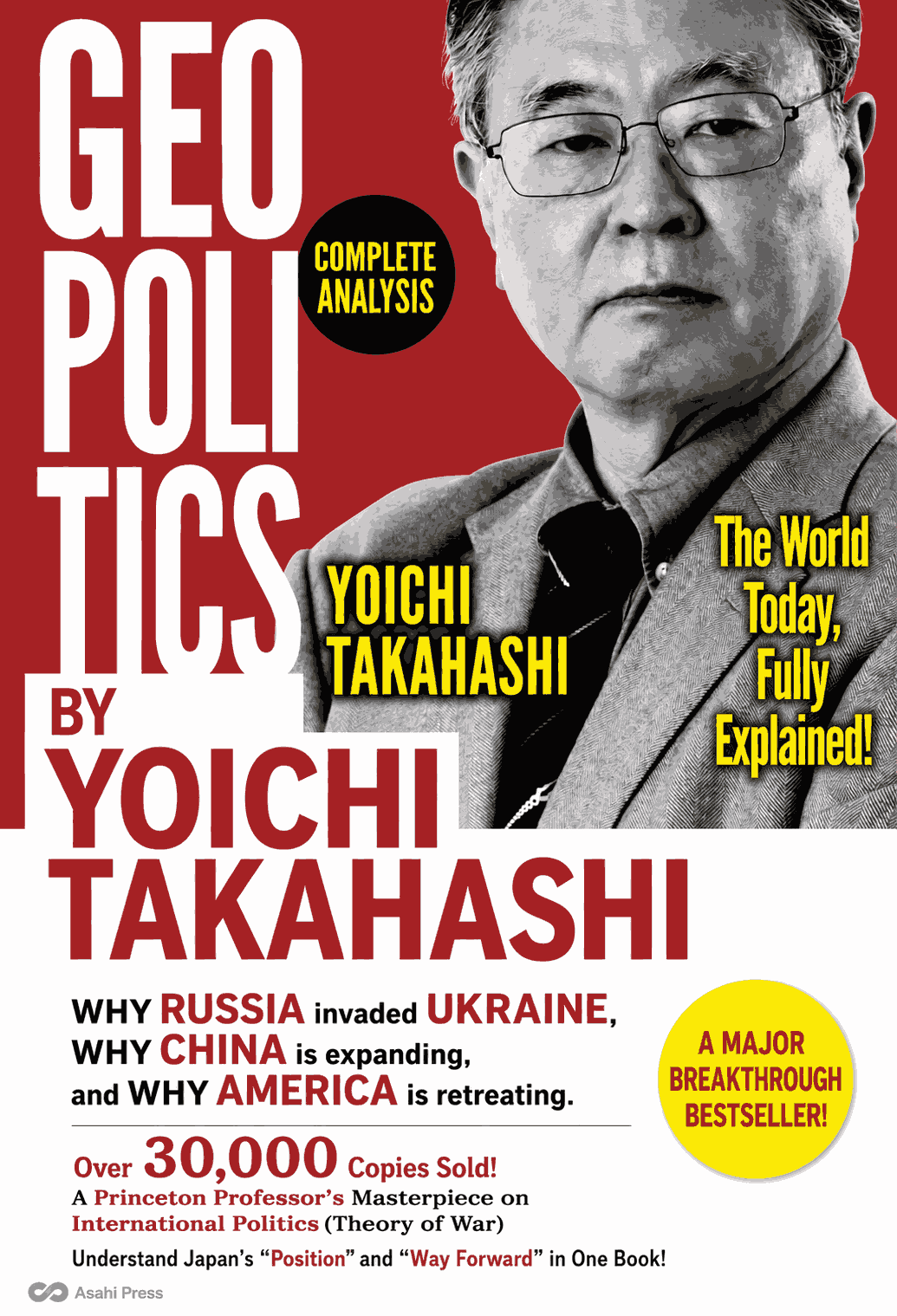
Geopolitics by Yoichi Takahashi
Original notes here.
A nation’s ambitions represent an obsession with territory, and this gives rise to geopolitics, which lies at the root of international affairs
On September 10, 2013, Obama declared that the United States was not the world’s policeman. Around the same time, Xi Jinping expressed ambitions over maritime areas, fitting the principle of the tug-of-war in which one side advances when the other retreats
When Bush invaded Iraq in the past and singled out North Korea as a state associated with terrorism, China consequently maintained its distance from North Korea, with the two sides repeatedly testing each other’s strength and capacity for action
In modern times, the sea has become far more important than land, making maritime politics more important than geopolitics. Britain established a Pax Britannica through its superior naval power, which lasted until the First World War brought it to an end; the new hegemon, the United States, had control over both great oceans
Steven Pinker’s The Better Angels of Our Nature points out that, comparatively speaking, wars before the twentieth century were extraordinarily brutal; if the death toll of the An Lushan Rebellion is adjusted through time conversion, it ranks first
Democratic peace theory: because individual values far outweigh state values in democratic countries, launching a major war is extremely difficult. Some scholars cite the war between Argentina and Britain over the Falkland Islands as a counterexample, but this shows a lack of understanding of the background: Argentina was still under military rule at the time
China’s Expansion into Maritime Areas
Faced with a trade deficit with Qing China, the British Empire had India sell opium to the Qing, while the silver eventually returned to Britain through India’s purchase of British cotton goods, thereby using triangular trade to resolve the trade deficit
The widespread circulation of opium threw Qing China’s political, economic, and social systems into comprehensive disorder. When the Qing banned the opium trade, Britain seized the opportunity to crush it by force and obtained Hong Kong, the best location for access to and from Southeast Asia
France was defeated in the Seven Years’ War and withdrew from its Indian territories, turning its attention to the Indochinese Peninsula. The two Treaties of Huế formally reduced Vietnam to a French dependency; the Qing government refused to recognize the treaties, and the Sino-French War followed
The Gapsin Coup broke out in Korea, and tensions rose as Qing China and Japan competed for influence there. The Sino-French War ended hastily, and the Qing signed the Treaty of Tianjin, recognizing the Treaties of Huế
Having actively Westernized, Japan demanded that Joseon Korea lift its ban and open the country, but Korea rejected the demand to open. Japan attacked Ganghwa Island and signed the Treaty of Ganghwa
The Enlightenment Party in Korea launched the Gapsin Coup, and the Qing government sent troops to suppress it. After the Treaty of Tianjin, China and Japan agreed to withdraw their troops, but the seeds of confrontation had already been planted
Korean reform went badly, tax revenues declined, and political corruption spread. After being forced to open the country, its economy fell into chaos, eventually giving rise to the Donghak Rebellion. The Qing government was invited to send troops to suppress it, while Japan also sent troops in opposition, leading to the First Sino-Japanese War. Britain, which had signed the Anglo-Japanese Treaty of Commerce and Navigation, had to send troops in support, becoming the greatest reason for Japan’s ascendancy
The Western powers were caught off guard and intervened in the Treaty of Shimonoseki, forcing the Qing government to lease Lüshun and Dalian to Russia as a “thank-you gift”
Besides leased territories, railway construction rights and mining rights were also granted, and the original East Asian order completely collapsed
A revolutionary consciousness began to awaken at home, centered on overseas students and overseas Chinese, who sought to overthrow the corrupt Qing government that allowed the great powers to do as they pleased and establish a Han Chinese nation-state
After the First World War, China was one of the victorious powers and should have been able to recover Germany’s rights and interests in Shandong, but its demands were deliberately ignored at the Paris Peace Conference. Under the Treaty of Versailles, Shandong’s rights and interests were actually transferred to Japan, provoking nationwide resistance in what became the May Fourth Movement, as opposition to the warlords and opposition to imperialism merged into a wave of protest
The history of China after the First World War is a history of cooperation and confrontation between the Kuomintang and the Communist Party. Their first cooperation in 1924 aimed to overthrow the domestic warlords and the imperialism of the great powers, but Chiang Kai-shek regarded the Communists as a major threat and launched the April 12 Coup in Shanghai in 1927 to suppress them. The Communists were forced to retreat into the countryside, established the Chinese Soviet Republic in 1931, and civil war between the two sides began; in 1936 they cooperated again to resist Japan
Japan initially swept through the region, occupying the colonial possessions of the great powers in Southeast Asia, but the following year it suffered successive defeats under counterattacks
After the Second World War and the Chinese Civil War, China, once carved up by the great powers, finally recovered its vast territory and population. The postwar era of colonial rule by the great powers in Southeast Asia also came to an end
During the Korean War, North Korea appealed to China for assistance halfway through the conflict, while the United States supported South Korea, effectively turning the war into a proxy war between China and the United States
The Communists advanced southward until they nearly reached Busan. This meant that China’s sphere of influence would extend to the Pacific, so its intentions were not difficult to understand. The United States therefore dispatched large numbers of troops and weapons to fight back, while Japan also actually participated by sending a special minesweeping force to clear remaining naval mines. The claim that Japan had been uninvolved in war for nearly 70 years is therefore not correct
Korean reunification would best serve Japan’s interests. North Korea’s unpredictability and refusal to behave according to conventional norms is the greatest threat in East Asia today, while a democratic Korea could serve as a buffer state between Japan and China
In 1979, pro-Soviet Vietnam, emboldened by its victory over the United States, invaded pro-Chinese Cambodia, triggering the Chinese punitive war against Vietnam. After Stalin’s death, Soviet socialism underwent major changes; even though Chinese and Soviet ideology was close, the two sides nevertheless became bitterly opposed because of the drastic differences in their actual methods
China is urgently expanding its maritime reach because of advances in military technology: U.S. military satellite imagery can now make out virtually every feature of the terrain, and only nuclear submarines at sea can prevent the enemy from observing what lies beneath the surface from the air. Its eagerness to control the South China Sea is intended to allow its nuclear submarines to extend their range into the Pacific, thereby increasing defensive capability while also demonstrating military strength
The nine-dash line established by the Chinese Communist Party in 1953 was derived from China’s eleven-dash line drawn in 1947, from which China voluntarily removed the two lines in the northern Gulf of Tonkin
China ignores the provisions of the United Nations Convention on the Law of the Sea, under which reefs submerged at high tide cannot be called islands, and nevertheless continues to assert territorial sovereignty over them
The World Police of the Past
Although the United States intervened around the world, it was relatively uninterested in the territories of other countries; the spirit of liberal ideals was the founding principle of the nation
The fifth president, James Monroe, proposed isolationism in his State of the Union Address, later known as the Monroe Doctrine. Its content was that the United States would not interfere in disputes among European countries or in Europe’s existing colonial affairs, but that from then on no European power could expand its colonial holdings on the American continents, and interference in the affairs of Latin American countries that had become independent from Spain would be regarded as hostility toward the United States
By the end of the nineteenth century, however, the United States had overtaken Britain to become the world’s leading power, and it shifted its ambitions toward Latin America and even the Pacific. In the Spanish-American War of 1898, it incorporated the Philippines and Guam into its map
In 1898, it announced the Open Door Policy toward Qing China, which had already been carved up among the great powers, demanding a share of the spoils
During the First World War, the United States provided massive assistance to the Allies. If they were defeated, it would be unable to recover its loans. Combined with Germany’s unrestricted attacks, which also affected American passengers and goods, this caused anti-German sentiment at home to rise sharply, and the United States declared war
During the conflict, it took advantage of the chaos to occupy Haiti and the Dominican Republic in Latin America, bringing the Caribbean into its sphere of influence
The United States entered the Second World War. On the surface, this was the result of the Pacific War, but in reality Britain and the United States had already negotiated in the Atlantic Charter over defeating the Nazis and managing the postwar settlement, so their intention to wage war was already extremely clear
In 1952, Japan regained sovereignty under the Treaty of San Francisco and remained within the United States’ sphere of influence
In 1947, U.S. Secretary of State Marshall announced the Marshall Plan, providing funds to European countries devastated by the Second World War to revive their finances and reduce the influence of communism, while simultaneously reviving America’s own export industries and economy
In 1951, Congress passed the Mutual Security Act, incorporating recipient countries into a defense system and pursuing both military and economic measures
France attacked Vietnam in an effort to maintain its prewar colonial control and established a puppet regime until the Geneva Accords
The Viet Minh in North Vietnam and the National Liberation Front in South Vietnam gradually expanded their influence. The United States joined the war to prevent the domino effect of communist expansion, but the U.S. military became bogged down in guerrilla warfare against an enemy familiar with the terrain. Growing antiwar sentiment eventually brought the war to an end. In 1976, North and South Vietnam were unified, while Cambodia and Laos also became independent as a socialist state
In 1959, the Cuban Revolution overthrew the dictatorship supported by the United States and took over foreign-owned companies, provoking U.S. opposition and the severing of diplomatic relations. Leader Castro turned to the Soviet Union for support
In 1962, U.S. reconnaissance aircraft discovered that Cuba was building missile bases, meaning that the Soviet Union was putting the entire United States within missile range. The United States then blockaded the Caribbean, while the Soviet Union had already dispatched a naval fleet loaded with missiles. If it had forced its way through, the consequences would have been unimaginable. Finally the two sides reached an accommodation, and the Cuban Missile Crisis was resolved at the very last moment
The attacks launched by the United States against the Middle East in the name of democratization were actually intended to obtain oil extraction rights
In 1979, Iran’s clerics staged a coup, overthrew the monarchy, and established an Islamic Republic combining religion and government. The United States considered this extremely dangerous and therefore provided large-scale weapons to Iraq, its enemy
After the Iran-Iraq ceasefire in 1988, the long war had left Iraq deeply in debt, so it turned its attention to Kuwait’s oil fields. In 1990, the Gulf War broke out, and a multinational coalition led by the United States invaded Iraq. Anti-American sentiment in the Arab world reached a peak, and the Middle East launched the September 11 attacks against the United States. The United States sent troops into Afghanistan and defeated the Taliban regime within two months
How did the United States reap what it had sown: in 1979, when the Soviet Union invaded Afghanistan, the United States provided weapons to the Afghan Mujahideen (including Islamic fundamentalists), successfully forcing the Soviet Union to withdraw
After driving the Soviet Union out, the fundamentalists believed that jihad had achieved results and expanded it further, which is why the United States today has only itself to blame
Russia’s March Southward
Russia began in the late ninth century with the Kievan Rus’ state established by the East Slavs
After reaching its peak in the tenth century, it gradually declined and was occupied by the Mongols in the latter half of the thirteenth century
The rise of the Grand Duchy of Moscow in 1480 ended Mongol rule, and the Russian Empire was established in 1721
Because land close to the Arctic Ocean was infertile and froze in winter, making it useless, Russia continuously sought to move southward in pursuit of ice-free ports and fertile land, with the Ottoman Turks becoming its first target
In the Great Northern War of 1700, the Ottoman-backed Sweden soundly defeated Russia
Catherine II once again activated the southward expansion policy. In the First Russo-Turkish War of 1768, Russia won, and Crimea was brought under its protection
The Crimeans demanded a return to their homeland, triggering the Second Egyptian-Ottoman War in 1787. Because allies Britain and Sweden switched sides and withdrew before the war, Russia ceded further territory under the Treaty of Jassy, but although Russia held the advantages of timing and geography, it had to interrupt the war because of the effects of the French Revolution of 1789
At the same time, Prussia, Austria, and Russia carried out the three partitions of Poland
In 1812, Russia invaded a neighboring country and was met with a declaration of war by Napoleon. Russia’s scorched-earth policy burned Moscow into an empty city, causing the invading French army to lose its supplies and reinforcements and suffer defeat. Finland was ceded to Russia, and some of the Polish territories previously acquired by France also fell under Russian control, becoming the nominally independent Congress Kingdom of Poland
After a string of victories, Russia turned its attention to the Middle East and gained territories in Georgia, Azerbaijan, and Armenia through two Russo-Persian wars. In 1828, it again forced the defeated Ottoman Empire to cede the area around the mouth of the Danube
Iran, under Russian direction, began attacking Afghanistan. Britain, which controlled India, felt threatened and acted preemptively, bringing Afghanistan under its protection in 1880
The Greek War of Independence in 1821 succeeded with help from Britain, France, and Russia, and Greece broke away from the Ottoman Empire. Egypt demanded that the Ottoman Empire cede Syria as payment for the troops it had provided during the war of independence, and when this was refused, it went to war. The Ottoman Empire turned to Russia for assistance. Seeing an opportunity to expand its influence, Russia entered the war. Britain and France feared Russia would grow too powerful and intervened, prompting the Ottoman Empire to grant Russia exclusive rights to navigate the straits through a secret agreement as compensation for its intervention
But in the Second Russo-Turkish War of 1839, the great powers assisted Turkey and also signed a Straits Convention with Turkey, forcing the original secret agreement to be abolished and effectively neutralizing Russia’s right of passage through the Mediterranean
In 1853, Russia and Turkey went to war again. Britain and France assisted Turkey, while Austria pressured Russia to withdraw its troops, putting Russia on the defensive. In 1855, Russia’s Black Sea stronghold of Sevastopol fell. This was one of the rare large-scale wars in modern history, known as the Crimean War, and Florence Nightingale became famous for improving medical conditions during it
Russia was defeated and lost its right of passage through the straits and its stronghold on the Black Sea, suffering a devastating blow. But while the Anglo-French forces were overwhelmingly defeating Qing China, Russia took advantage of the situation and used the Convention of Peking to force the Qing to cede Vladivostok, finally obtaining an ice-free port
The Russo-Turkish War of 1877 was the final war between the two countries in two hundred years. As Slavic peoples within Turkey rebelled against Muslim rule, Russia, under the banner of Pan-Slavism, won a major victory. Its sphere of influence should have expanded into the Balkans, but British and Austro-Hungarian intervention led to the Treaty of Berlin in 1878 replacing the original Treaty of San Stefano, rendering the fruits of the war null and void
Disputes over spheres of influence in East Asia led to the Russo-Japanese War. Russia should have possessed overwhelming superiority, but because of the Anglo-Japanese Alliance and backing from the United States, combined with growing revolutionary unrest at home, Japan managed to reverse the course of the war. The United States intervened as mediator, and the two sides signed the Treaty of Portsmouth, dividing spheres of influence in Manchuria and ceding southern Sakhalin, preventing further expansion
In 1914, the heir to the Austro-Hungarian Empire was assassinated by a Serbian youth. Austria-Hungary declared war on Serbia, and Russia once again prepared to expand its influence in the independent Balkans, so it supported Serbia. Germany then declared war on Russia. Russia suffered a surprising defeat with enormous casualties, and public resentment boiled over
In March 1917, popular uprisings spread across the country, the tsar was overthrown, and the middle class established a parliament and provisional government, while workers in various places simultaneously formed soviets, resulting in two governments standing in opposition to each other
In November, corresponding to October under the old calendar, an armed uprising led by Lenin and his party succeeded, known as the October Revolution. The Soviets’ appeal for all countries to cease fighting was ignored, so they signed a separate peace treaty with Germany, renouncing claims to Finland, Estonia, Lithuania, Latvia, Poland, Ukraine, and the territories along the Ottoman frontier, losing an unprecedentedly vast amount of territory. Although Germany later lost the war and annulled the treaty, the independence of some of these territories remained effective
The independent regions, however, gradually produced Soviet governments, allowing the Soviet federation to expand, and a vast one-party dictatorship took shape
In 1938, Germany embarked on a series of annexations, and the Soviet Union feared its ambitions. But at the Munich Conference, Britain and France were hostile toward the Soviet Union and tacitly allowed Germany to attack it. In Britain, however, calls to protect Poland also emerged, creating an atmosphere of mounting tension. Russia also clashed with Japan in May 1939; in August 1939, Russia and Germany secretly signed a non-aggression pact
By 1940, Germany had invaded the Balkans and occupied Yugoslavia and Greece. The Soviet Union realized that the situation had become urgent. In June 1941, Germany broke the pact and attacked Russia; in April, Japan and Russia had already signed a neutrality pact
In February 1945, the Soviet Union signed a secret agreement with Britain and the United States to attack Japan. On August 8, it broke its promise and attacked Japan, while Japan surrendered on August 14, making the Soviet Union a “victorious power”
In 1979, the Soviet Union attacked Afghanistan, showing that the southward expansion policy remained active. The United States successfully supported efforts to block the offensive, and the Soviet Union gradually withdrew its troops in 1988
The author believes that Russia’s obsession with the Four Northern Islands is because returning them to Japan would cause other territorial disputes to surface as well
In 1986, Gorbachev moved away from one-party dictatorship and introduced a presidential system. Democratization movements arose across Eastern Europe, the Berlin Wall fell in 1989, and the Soviet Union dissolved in 1991
Apart from Russia and its satellite states, the other independent countries gradually joined NATO and the European Union, while the Warsaw Pact, originally led by the Soviet Union to counter them, was dissolved
With its influence greatly diminished, Russia feared that Western European power would advance straight into its sphere. Ukraine played an important role as a buffer restraining Western European influence, but in February 2014, the pro-Russian forces in Ukraine fell and an interim government took a pro-European stance, so Russia annexed Crimea as its final buffer
Europe, Where Repeated Conflict Eventually Gave Rise to a Community
Germany’s colonial policy lagged far behind Britain’s, and in an attempt to reverse the situation, it devised the 3B policy. In 1903, it obtained railway construction rights from Turkey, connecting Berlin, Baghdad, and Byzantium
Britain countered with the 3C policy, planning railways connecting Calcutta, Cairo, and Cape Town
Russia, under the banner of Pan-Slavism, also coveted Ottoman territory, putting it at odds with the Austro-Hungarian Empire, backed by Germany and championing Pan-Germanism, making the Balkan issue increasingly complicated
Britain, France, and Russia were originally bound by friendly entente relations, while France and Germany also had sovereignty disputes
These factors caused Europe to split into two camps within a week of the outbreak of the First World War: the Allies led by Britain, France, and Russia, and the Central Powers consisting of Germany, Austria-Hungary, the Ottoman Empire, and others
Japan joined through the Anglo-Japanese Alliance, while the United States, which had adopted isolationism, also joined the Allies because of domestic public opinion
Countries outside Europe gradually entered the war, and the originally stronger Central Powers gradually showed signs of exhaustion and eventually surrendered
After the war, the Austro-Hungarian Empire collapsed, the Ottoman Empire was partitioned, and Tsarist Russia also disintegrated. Numerous nation-states became independent. The seemingly well-intentioned British and French were actually building walls to contain the influence of the Communist revolution
In 1915, Britain and Arab tribes within the Ottoman Empire signed the Hussein-McMahon Correspondence, promising independence if the Arabs defeated the Ottoman Empire. Later, however, Britain secretly negotiated with foreign powers to partition the Ottoman Empire, place Palestine under an international organization, and promise that the Jews could establish a state. These “contradictory promises”, together with the collapse of the Ottoman Empire, caused the Middle East problem to continue to haunt the present day
Another Middle Eastern problem that emerged was the Kurds. The original Treaty of Sèvres granted them the right to independence and autonomy, but the Treaty of Lausanne, which restored the sovereignty of the Turkish Republic, revoked it, leaving them scattered across different countries as minorities in each
Palestine was another problem. Based on the Balfour Declaration, Jews were allowed to settle there, but this eventually evolved into a dispute between two peoples over land. Britain, responsible for the mandate, threw the hot potato to the United Nations, and the issue remains unresolved to this day
After the First World War, the great powers ignored the complex background of the Middle East and simply designated spheres of influence. The Middle East thereby became the greatest powder keg of the twenty-first century. The Islamic State, led by remnants of Saddam Hussein’s regime in Iraq, is one of the great tragedies produced by this history
In 1922, domestic discontent in Italy grew because, despite being a victorious power, it had not received a corresponding amount of territory. Mussolini took the opportunity to establish the Fascist Party
The Great Depression of 1929 triggered a chain reaction. To protect their economies, countries restricted imports. Germany, which depended on exports, was hit first and hardest and became unable to pay reparations. In 1932, unemployment reached 6.2 million, society became unstable, and Hitler emerged as a figure who could restore public confidence
Britain and France could not accept Germany’s expansion into Poland and declared war. Russia, having seen how Britain and France had previously allowed Germany to take whatever it wanted, could not trust them and instead signed a non-aggression pact with Germany
Germany consistently relied on blitzkrieg, but encountered fierce resistance when it attacked Britain, then shifted its target to Eastern Europe and broke the pact to invade the Soviet Union. Britain and the United States jointly aided the Soviet Union, and the German army withdrew from the Soviet Union. Anti-fascist movements surged in Italy, and Britain and the United States took advantage of the opportunity to attack, overthrowing the fascist regime; Germany, encircled on two fronts, also surrendered
During the U.S.-Soviet Cold War, NATO and the U.S.-Japan Security Treaty were established to encircle the Soviet Union
Today, economic cooperation has expanded to the level of the European Union
In June 2015, during the Greek debt crisis, Russia and Greece signed a cooperation agreement under which Russian natural gas would be exported to Europe via Greece. Because this was a sensitive moment when a Greek exit from the eurozone seemed highly possible, a withdrawal would have caused NATO to lose a military ally on the Mediterranean coast, creating a security problem. This led EU countries, which had originally taken a harsh view of the issue, to soften their stance
The following month, a Greek referendum accepted EU financial assistance and fiscal austerity
According to economist Robert Mundell’s theory of optimal currency areas, the conclusion is that Greece is the country least suited to using the euro
If Greece were not intimidated by great-power pressure and negotiated forcefully enough to restore the original Greek currency while remaining in the EU, that would presumably be the best possible outcome for the Greek people. Treating only the symptoms does not address the fundamental problem of whether Greece is suitable for the euro, so the same problem will continue to recur
There were 38 wars involving over a thousand deaths after the Second World War, 15 of them in Asia. According to democratic peace theory, this is because fully democratic countries are extremely rare in Asia
The author then uses data to show that strengthening a country’s alliance relationships can reduce the risk of war, using this to support Japan’s right to collective self-defense
China and North Korea are perhaps the greatest threats to Japan. China has even organized maritime militias, disguised as fishing civilians but possessing the scale of a navy, making it impossible to use force against them
Japan once invaded China, and China today is again under one-party rule. Its constitution stipulates adherence to Communist Party leadership, with no constraints on government power
The greatest concern for the United States is also China, which has been highly active in the South China Sea, yet the United States is asking Japan to bear more of the military burden
Joint U.S.-Japanese defense, combined with cooperation with Vietnam and the Philippines, is Japan’s path to survival
Finished reading on August 14, 2020
Takahashi maps the raw geographic and historical forces driving today’s global conflicts, concluding that democratic alliances must unite to counter the relentless expansion of authoritarian regimes. But can the democratic world effectively resist these external geopolitical threats when it is fracturing from within?
In The Fate of the West, Bill Emmott examines the internal decay of open societies, arguing that before the West can win this global chess game, it must first fix the systemic inequality and political rigidities that are destroying its strength from the inside out.