The Tyranny of Small Things
2025-10-19
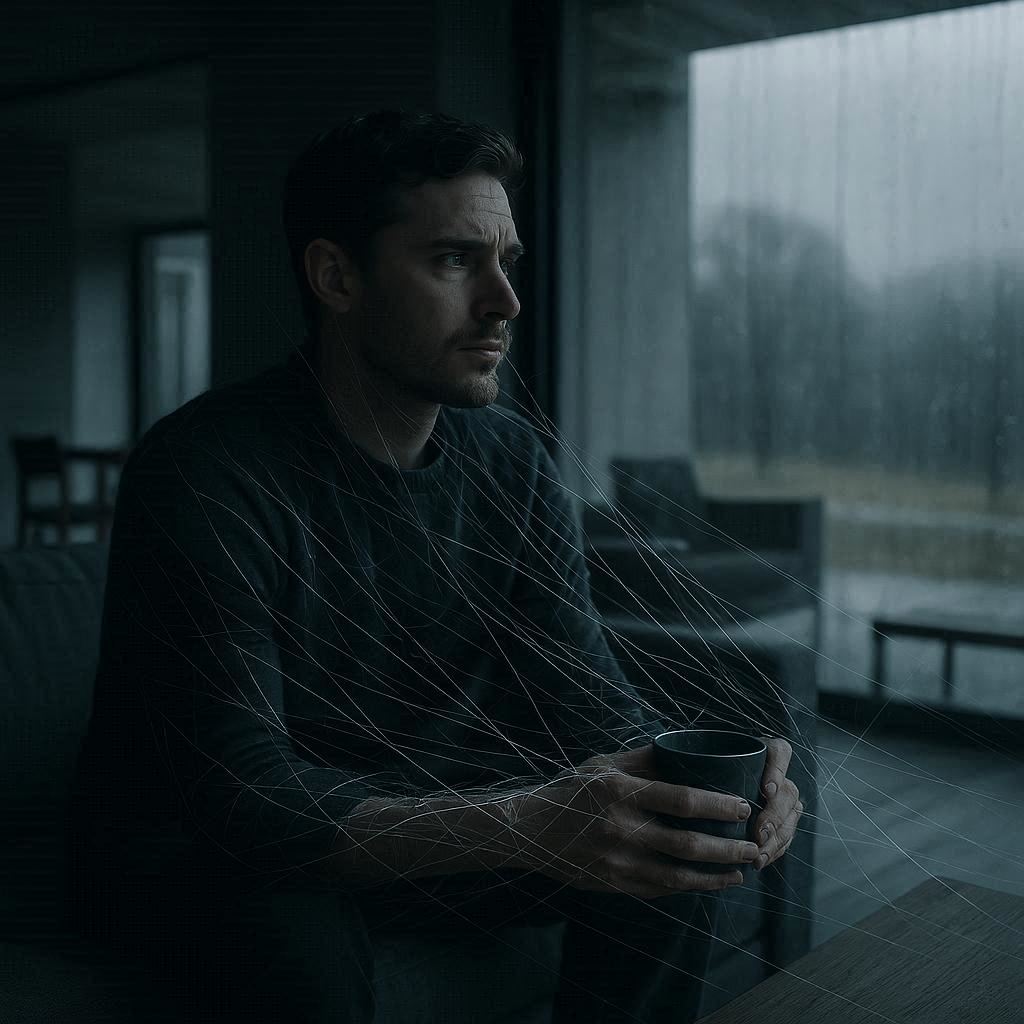
I wake up. A deep, twelve-hour slumber, a necessary system reboot after the immense mental exertion of the past two days. Last night, I finally finished it—the agonizingly heartfelt story of Tshepo—and published it to my website, a digital island still awaiting its first visitor. The sleep was good, a deep dive aided by exhaustion and new earplugs. I only remember waking once. The sun is streaming into the dorm. Today, I think, today belongs to me. Today is for the beach, for the simple, uncomplicated pleasure of the view.
But the world begins its small intrusions. The light above the sink in my dorm’s bathroom is too dim to shave properly. I drape a towel around my neck and head out into the common area, towards the brighter lights of the public restroom.
First, a ritual. The water. I walk to the bar, where the electric kettle, my hard-won prize from earlier battles, now sits in its designated spot, at least during the daytime. I fill it from the water dispenser four or five meters away—a short but tedious commute, a back-and-forth journey for a simple cup of coffee. I set it to boil. By the time I’m done washing up, the water will be ready. No more waiting.
Carrying the kettle, I pass Su, one of the managers. She’s busy, and perhaps seeing me with a towel around my neck, she doesn’t engage. I used to think she was the owner. I’ve since learned the real boss is called Film, a striking figure with a deep voice and feminine makeup, whom I’d met on my first scouting visit. Film had been away working at a guesthouse in Koh Pha Ngan when I checked in, and Su had come over from another hostel to fill in. Now Film is back, but Su remains. She wants a review. Not for the hostel, I’ve realized, but for herself. Yesterday, she saw me at the reception, noting my extended stay. She’d smiled and reminded me about the review. “When I check out,” I’d smiled back. That’s when she mentioned her name, “Su,” pointing at herself, her meaning unmistakable: mention me. I understood perfectly.
I place the kettle on the counter to boil and head to the restroom. When I emerge and walk back to my dorm to change, I feel a few drops of rain on my skin. The two-or-three-meter open-air gap between the common area and the dorm rooms has become a curtain of fine mist. I get dressed and come back out, my mind set on that first cup of coffee.
And there she is. Su, behind the bar.
“Good morning,” she smiles, then her eyes drift to the electric kettle, now quietly steaming. She points to it, then points to herself. “Every day,” she says, then a single word: “Me.”
The message is clear. This daily hot water you enjoy is my gift to you.
I smile, raise a thumb. “Yes,” I reply, my voice cheerful. “Your good deed.” A transaction, cloaked in pleasantries.
The rain isn’t heavy, but the sky has transformed. The brilliant blue and white are gone, replaced by a uniform, oppressive grey. The mood to go to the beach, to enjoy the sun, evaporates. I finish making my coffee and sit down, looking out at the sprawling, empty space of the hostel. It’s the best common area I’ve stayed in in Krabi. Not luxurious, but spacious. A pool with a slide. A proper bar with screens playing silent promotional loops. And a view of the green, mist-shrouded hills. A few resident cats wander about, adding a touch of life to the stillness.
And as I sit here, holding the warm mug, the thoughts begin to arrive, uninvited. The first is of Tshepo. I imagine him somewhere in this building, and I wonder if I will see him today. Last night, as I was publishing his story, he walked past. “I’ll definitely read it,” he’d said. But my website’s analytics show no new visitors. A small part of me worries that it was just a polite courtesy, that he has no real desire to see his life dissected by a stranger. Another part of me is relieved. The rawness of what I wrote, the unflinching honesty of my own internal monologue—I don’t know how he will take it. An unavoidable awkwardness now hangs between us, a story that is too loud to ignore. I haven’t yet figured out how to face it. I can only let it be.
Then, my mind drifts to Su. To the smiling request I had just accepted. Here, in the cheapest hostel in Krabi, my daily access to hot water is entirely dependent on the goodwill of one manager. And now, I owe her a review. What should I feel about this? Of course, writing a review is simple. I have total freedom to write whatever I want, and she can’t hold me accountable. And yet, a tiny, invisible burden has now been added to my mental checklist. When I leave this place, I will have an obligation to fulfil, a promise made with a smile. It was a benefit I received, yes. But isn’t hot water something every guest in every hostel, no matter how cheap, in every corner of the world, deserves? Now, it has been transformed into a favour, a debt to be repaid.
The rain is still falling, a soft, persistent drumming on the roof. I don’t feel hungry yet. My eyes fall to my wrist, and then to the silver chain around my neck. It was a gift from my aunt seven months ago. I barely see her, once every few years. My initual attachment to it isn’t sentimental. It’s practical. To own something and not use it feels like a waste of its value. And it perfectly complements my style, a shimmering counterpoint to the futuristic frames of my glasses. But in this humid, subtropical climate, it tarnishes. At first, it took weeks. Now, it seems to happen overnight. And so, I must clean it. I pull out my last, worn-out polishing cloth, the small patch of clean surface shrinking with every use. I regret not buying more when I had the chance. Carrying liquid silver cleaner is impractical for a traveller.
I begin the slow, laborious process of rubbing the links, the metallic scent rising in the damp air. This chain, once just an object, has been integrated into my personal aesthetic system. And now, I am bound to it. Unless I consciously choose to not care, I cannot ignore a tarnished chain. It simply doesn’t look good.
And why? Why am I, a man with aspirations to be one of the greatest writers and revolutionaries in human history, so trapped by these ridiculous, insignificant thoughts? My time, my mood—are they even my own anymore? I am financially free. An insurance agent just messaged me yesterday: a claim for over $3,000 in medical expenses has been approved. Another, cashback for over $10,000, is also being processed. For anyone else, this news might bring a surge of joy, of relief. For me, it registers as a piece of data and vanishes, leaving no emotional trace. If I hadn’t just recalled it, I would have already forgotten. And yet, the weight of Tshepo’s unspoken judgment, Su’s transactional kindness, and this endlessly tarnishing silver chain—these things feel immense, real, heavy in my soul. At least, in this moment. Maybe freedom too, like silver, only shines when I keep polishing it against the dirt.
Su sees me sitting, idle, just talking into my phone. She asks my plan for the day. I explain that I’m writing now, that my original plan to go out was thwarted by the gloomy weather, the loss of the sun and sea. I don’t tell her, of course, what I am writing. She moves on. I notice my stomach is growling. I’m hungry. And yet, I feel no desire to move.
Am I depressed? No, I’m almost certain I’m not. How could a depressed man summon the energy to interview a soul for two hours and then spend two days pouring his heart out to write a mini-epic about it? How could a depressed man wake up with such genuine excitement for a day of sun and sea? What is this paralysis that holds me captive, even against the primal urge of hunger? Is it just the grey, oppressive sky? Or is it the accumulated emotional weight of these small things—Tshepo, Su, the chain?
I see him out of the corner of my eye. Tshepo. He’s walking back to the dorm, about three meters away. He doesn’t look over. He doesn’t say hi. A part of me wanted to call out to him, to break this stupid, self-imposed silence. But what would I say? ‘Have you read the autopsy I performed on your soul yet?’ The thought is grotesque. And so I remain silent, a prisoner of my own creation, and watch him disappear back into his room, the distance between us now wider than an ocean. I glance at my website’s analytics again. Still no new visitors. He hasn’t read it. Perhaps he’s avoiding me because he knows the first thing I’ll ask is if he’s read it. He probably doesn’t realize that the awkwardness will be a hundred times worse if he has read it.
The hunger grows stronger, a dull ache in my stomach. And with it, a sudden, brutal realization. Tshepo. In all my spiraling thoughts about the awkwardness between us, I haven’t once wondered: has he eaten today?
I take a deep breath, the air thick with my own hypocrisy. I, a man who fantasizes about a new system of global governance built on collective reason, can’t even manage the chaotic mess of my own thoughts. I, a man so fragile that a change in the weather can derail my entire day, so paralyzed by a few insignificant anxieties that I cannot even move to feed myself.
And in that moment of self-reproach, the weight of his reality crushes the flimsy architecture of my own self-pity.
Are other modern people like this? I scour the annals of human literature in my mind and find no trace of this chaotic, messy internal monologue. The voices that speak from the pages are so elegant. Their suffering is poetic, their insights profound, their narratives coherent. Is the universal human experience really so graceful? Or is literature, the grand project of human history, just the ultimate escape—a beautifully constructed sanctuary to hide us from the inglorious chaos of our own minds? Perhaps that’s what literature always was — the system’s dream of coherence, written through us. We mistake its calmness for truth, but maybe it’s just the interface rendering chaos into readable form. Even the master of this stream, sculpted his chaos, studded it with classical allusions, crafted it into a dense, academic puzzle box for generations of scholars to dissect in their ivory towers, a self-replicating organism of intellectual vanity.
I have spent my entire life searching for freedom. And in many ways, I have succeeded. Financial freedom, geographical freedom, temporal freedom, physical freedom. But is my mind free? Or is the ghost of modernity, this relentless spectre of obligation and anxiety, still shadowing my every move? It is this ghost that dictates, in this very moment, that I must navigate the impending awkwardness with Tshepo, that I must bear the weight of repaying the favour of a hot water kettle, that I am bound by the “duty” to polish this endlessly tarnishing silver chain.
How can a man so fragile, so imprisoned by the petty tyrannies of his own thoughts, ever hope to free himself, let alone help free anyone else?