The View from the Top Deck
2025-09-18
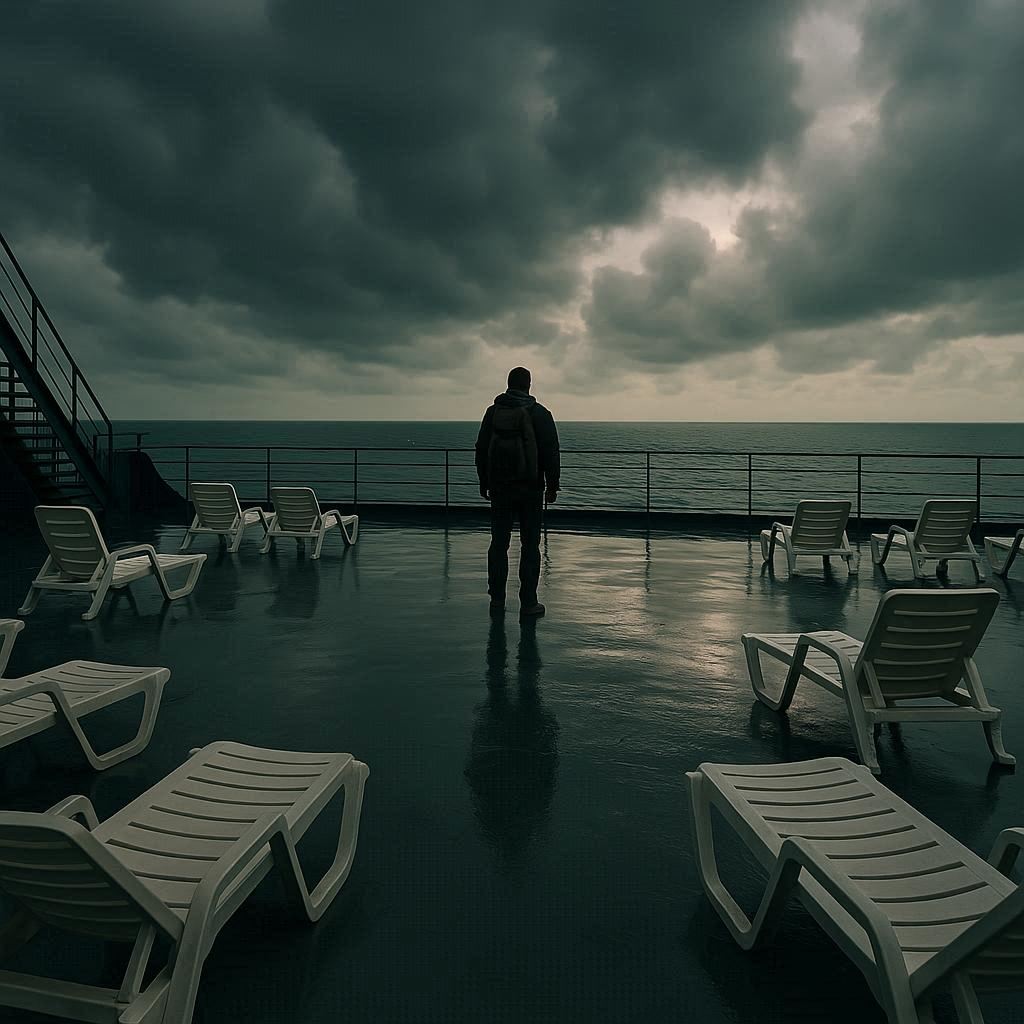
There’s a strange paradox to the ferries that ply the Gulf of Thailand. Onboard, you are surrounded by one of the most beautiful seascapes in the world, yet the primary goal of the interior design seems to be to make you forget you’re at sea at all.
I was on the slow boat to Koh Pha Ngan, a hulking car ferry designed for utility over aesthetics. Inside, the passenger cabin was a haven of modern comfort: cushioned seats, snack bars, and an air conditioning system blasting at a temperature best described as “arctic winter.” After an hour, the manufactured chill began to seep into my bones. I looked around. I wasn’t the only one. A huddle of fellow travelers had already surrendered, pulling out blankets and hoodies, cocooning themselves against the cold.
I couldn’t stand it. I had to move. I left the cabin and stepped outside. The air was warm and briny, the wind was fresh. Of the hundreds of passengers on board, less than a fifth were out here, choosing the raw elements over the refrigerated comfort inside. They were rewarded with an uninterrupted view of the churning, grey-green sea.
But was this the best view? My curiosity sparked. I started to wander. I walked the length of the main deck, and then I saw a staircase I hadn’t noticed before, leading up. I took it.
What I found at the top was breathtaking. It was the ferry’s sun deck, a vast, open expanse with a 360-degree, panoramic view of the sea and sky. The boat was a tiny island in an infinite world of water and clouds. Including myself, there were exactly six people up there. Six. Out of hundreds. I don’t remember the last time I’d felt such a sense of space, of being completely enveloped by the horizon. The sky wasn’t perfect, but under the vast, cloudy dome, my mind felt astonishingly clear. A kind of magic lingered in the air, a quiet majesty that made me want to stay there forever.
Why was this incredible place almost deserted? If I hadn’t been restless, I would have missed it completely. In fact, I’m sure I had missed it before. I’d taken this same type of ferry to Koh Samui years ago, yet this stunning panorama held no place in my memory.
I thought about the passengers below. Many were burdened—literally. They were wrestling with suitcases, giant backpacks, the physical baggage of their journey. It’s not easy to explore when you’re tethered to your belongings. My own eight-kilogram pack was securely chained to a seat railing below with a bicycle lock, leaving me free to roam without a care.
But what if they were carrying their bags? How much effort does it really take to walk up a flight of stairs? The real baggage, I realized, wasn’t physical. It was mental.
It’s a phenomenon I see everywhere. The vast majority of travelers, even the most adventurous ones, exist within a self-imposed bubble. A whole other world of experience lies just a few steps away, but they prefer to stick to the familiar path. Learning just a few words in the local language—especially the names of your favorite foods—can transform your entire journey, yet so many seem to have no desire to even try. I’ve met long-term travelers who proudly state they can get by without knowing a single local word. And they’re right, they get by. They survive. But they never thrive. They never get better. The panoramic view is just a few steps away, but they’d rather wrap themselves in a blanket in the cold.
Just then, two young women appeared at the top of the stairs, their eyes widening as they took in the view.
“Oh my God,” one of them breathed. “Oh, fuck…”
Her awe-struck whisper confirmed it. The magic was real. You just had to be willing to climb the stairs to find it.