Notes on Reverse Economics
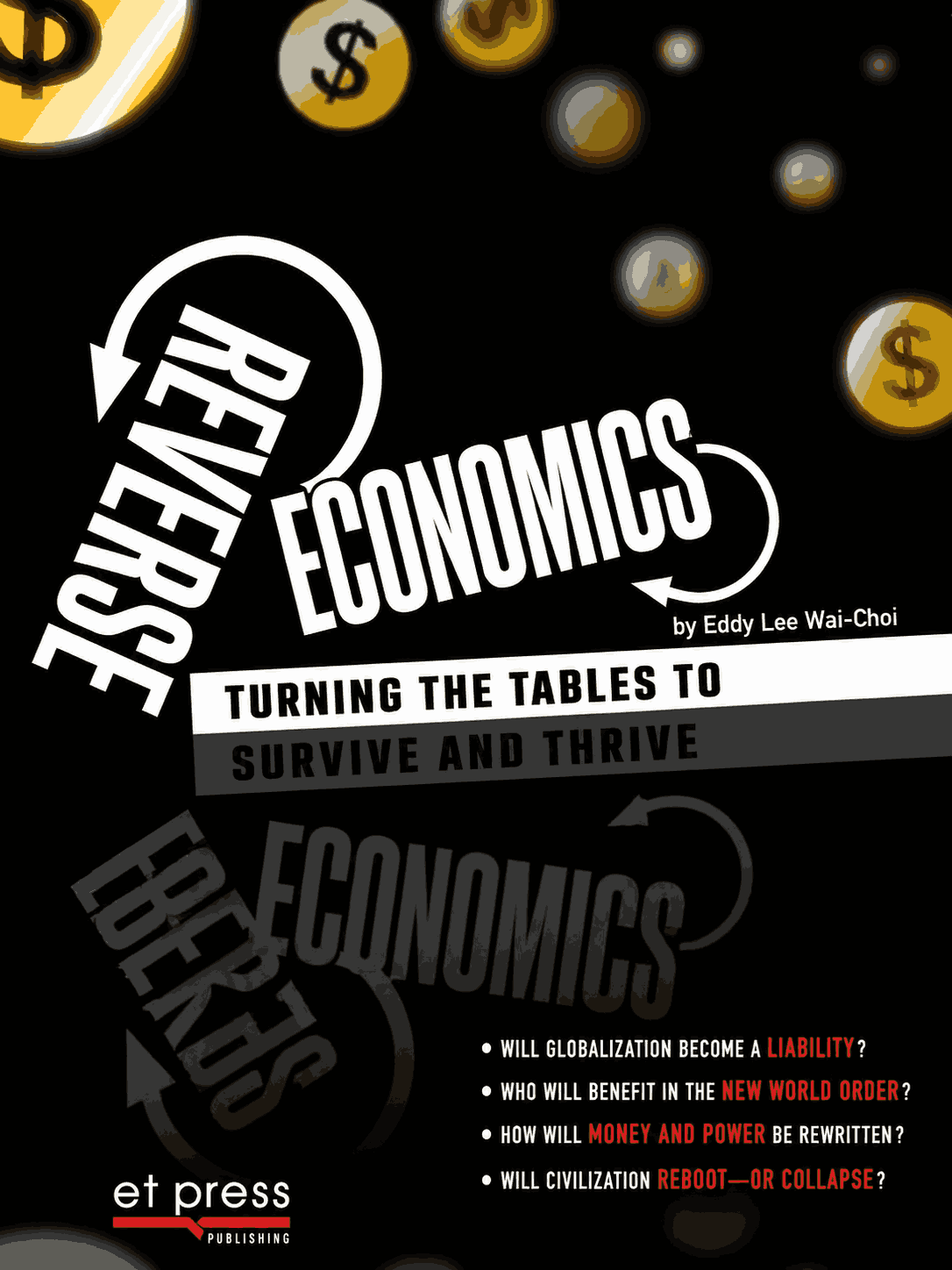
Reverse Economics by Eddy Lee Wai-Choi
Original notes here.
Read until the end to get a bonus. Enjoy reading.
“The New Right Returns to Power”: In the United States in the 1930s, Roosevelt introduced a series of New Deal policies to rescue the economy, narrow the wealth gap, and boost economic growth, but the Right denounced them as communist. See Paul Krugman, The Conscience of a Liberal (2007).
After decades of careful organizing by the Right, together with factors including the stagflation caused by the oil embargo from 1973 to 1979, Hayek and Friedman subsequently receiving Nobel Prizes, China’s reform and opening-up, and the decline of the British economy as a result of powerful trade unions, the Right eventually returned to power. Represented by Margaret Thatcher and Ronald Reagan, it came to dominate the governments of Britain and the United States and profoundly influenced the world. For an account of the struggle that brought the New Right forces represented by Reagan back to power, see Kim Philips-Fein, Invisible Hands: The Making of the Conservative Movement from the New Deal to Reagan (2009).
From then on, the global workers’ movement went into retreat, while the distribution of the gains from economic growth shifted increasingly toward capital. For several decades, the world has essentially been shaped by this historic turning point: the return of the New Right.
Since the New Right’s return to power, the Soviet Union has collapsed, Eastern Europe has turned toward capitalism, India has abandoned its planned economy, Friedman has visited China twice, and the Western world has vigorously promoted global economic integration through the World Trade Organization, the International Monetary Fund, the World Bank, and similar institutions. The Right achieved total victory.
The election of the black Democrat Barack Obama was certainly a major blow to the New Right, but entrenched vested interests remained deeply rooted, and the New Right was not fundamentally weakened. The three major goals Obama set out during his campaign—financial reform, healthcare reform, and renewable energy and green industries—remained difficult to achieve, and in some respects seemed remote. The coming decade would be crucial in the struggle between restoration and counter-restoration. Paul Krugman’s The Return of Depression Economics and the Crisis of 2008 (2009) identifies the one thing standing in the way of global prosperity as the disorienting, outdated dogmas that have taken hold of people’s minds.
[Hayek and Friedman are often discussed together, but they actually belonged to the Austrian and Chicago schools respectively. Both advocated big markets and small government, but the Austrian School believed that the assumptions of traditional science could not be applied to human beings and therefore rejected the use of mathematical and statistical tools. In its advocacy of a laissez-faire market economy, the Austrian School was, if anything, even more extreme than the Chicago School. It argued that when the financial tsunami hit in 2008, the U.S. government should simply have let insolvent financial institutions go bankrupt rather than spending vast sums to rescue the market, and it opposed government intervention through monetary policies such as sharply cutting interest rates and massively printing money.]
These right-wing forces adhered to neoliberalism. Compared with classical liberalism, neoliberalism places greater emphasis on the economic sphere and holds that political freedom can only be protected by safeguarding economic freedom. Its prescriptions include privatizing public utilities, deregulating industries, abolishing tariffs and promoting global free trade, removing foreign-exchange controls to allow the free movement of capital, and fully opening markets. Its policies often include breaking up trade unions, increasing labor-market flexibility (allowing large-scale layoffs), maintaining low progressive taxation (so that the wealthy do not necessarily have to pay proportionately more tax), outsourcing and offshore production by multinational corporations, and promoting contract employment in place of secure long-service employment.
Neoliberals believe that the market mechanism can achieve the highest level of efficiency, and that the less the government intervenes in the economy, the better. Welfare is seen as something that only weakens the incentive to create wealth, harms economic prosperity, and makes the plight of the poor even worse. The correct approach, they argue, is to make the economic pie larger so that everyone benefits. This is what is known as trickle-down economics.
For decades, this theory became the national policy of most countries. Vast numbers of public institutions were privatized, giant multinational corporations expanded rapidly through massive mergers and acquisitions, and the great wave of globalization swept across the world. Hong Kong’s Donald Tsang administration also supported trickle-down economics.
After years of countries around the world pushing neoliberal policies, the results are plain to see: inequality has become increasingly severe, wealth has become ever more concentrated, trickle-down economics has been shown to be unworkable and, in practice, has produced the opposite “trickle-up effect”—while financial crisis after financial crisis has been accompanied by severe economic recessions and unemployment.
[Sociological research shows that many of the factors producing differences in wealth are matters of chance. Yet these chance factors can become self-reinforcing, creating a virtuous cycle in which the rich become richer or a vicious cycle in which the poor become poorer. These two cycles are respectively known as the “Matthew effect” and the “poverty trap.”]
Over the past several decades, global productivity has multiplied, yet it has produced countless bizarre phenomena: people work longer hours and face greater pressure; dual-income households have become the norm (otherwise families cannot make ends meet); outsourced workers’ wages have been pushed down to levels barely sufficient to live on; unemployment is treated as a personal problem, with workers expected to “add value to themselves” constantly in order to maintain their “employability”; major corporations continue to cut jobs even as profits rise, supposedly to “enhance competitiveness”; whenever a major corporation announces layoffs, its share price rises rather than falls; major cities are rushing to develop gambling industries to increase tax revenue… Economists can always come up with explanations for such phenomena, but they cannot explain why we have allowed society to develop to such a state.
Finance should serve human economic activity. It should be the servant of the economy, not its master. Yet before the financial tsunami, the virtual economy generated by financial activity was more than twenty times the total value of the world’s real economy. After the tsunami, governments rescued the markets with taxpayers’ hard-earned money, while executives of the financial institutions whose extreme greed had plunged the world into misery were still able to enjoy enormous salaries and bonuses.
Neoliberalism has spread the idea that economics is a body of thought that transcends political ideology. In reality, what it advocates is itself a political ideology. The school of thought it promotes has led to an enormous expansion of utilitarian calculation, undermining communal virtues. See Stephen Marglin, The Dismal Science: How Thinking Like an Economist Undermines Community (2008); Michael Sandel, What Money Can’t Buy (2012).
The tragedy of letting market thinking erode social norms can be seen in the following example: an Israeli day-care center introduced a new rule under which parents who were late picking up their children were charged by the hour. The policy unexpectedly made lateness more frequent. Previously, when parents were unavoidably late, they felt guilty; once money had been attached to lateness, they could instead invoke market thinking and feel perfectly at ease.
The scientific advances of the last century—including radiological diagnostics, nuclear energy, gene therapy, lasers, fiber optics, artificial satellites, and the internet—were not developed by corporate executives earning astronomical salaries. They were invented by public servants of moderate income who were nevertheless driven by ideals. They did not become rich from their inventions, but the world benefited enormously from their contributions.
Economics assumes that human beings are rational animals who calculate in pursuit of maximum benefit. Yet an experiment involving the ultimatum game proved that people can sacrifice material gain in pursuit of fairness. In the game, Player A receives a sum of money and may divide it between himself and Player B in any way he chooses. If B accepts A’s proposed allocation, both may keep the money; otherwise, both receive nothing. Experiments show, first, that A rarely chooses an extremely unequal division; second, when A proposes an extremely unequal division, B will often prefer to let the deal fall apart. An experiment on capuchin monkeys likewise confirmed that monkeys have a sense of fairness.
What matters in life is setting the right goals. Yet for more than half a century, humanity has set itself the highly one-sided goal of gross domestic product. This measure does not include the depletion of the natural environment or the social costs of economic growth; it merely presents a false image of prosperity. See Amartya Sen, Development as Freedom (1999). If someone wanted to make the greatest possible contribution to a country’s GDP, the most effective approach would be to suffer from a chronic illness requiring enormous medical expenditures, engage in costly and protracted litigation, and drive a gas-guzzling SUV around everywhere. By the logic of GDP, a dead tree has infinitely greater economic value than a living tree, because only a tree cut down and turned into timber has economic value; a living tree, no matter how important it is to the ecosystem, has none.
China’s GDP has surpassed Japan’s, but in per-capita terms China ranks 93rd in the world while Japan ranks 25th. Because of the enormous disparity between rich and poor, even per-capita figures fail to reflect reality. Kate Pickett and Richard Wilkinson’s The Spirit Level: Why More Equal Societies Almost Always Do Better (2009) points out that inequality can lead to a wide range of social problems, including social alienation, loss of values, stress, mental illness, violence, crime, teenage pregnancy, adolescent drug abuse, shorter life expectancy, obesity, and so on. These problems have little relationship with a society’s absolute level of affluence.
Several decades ago, gross national product was more commonly used. It was nation-based and measured the wealth created by a country’s nationals. Today, however, the more prevalent gross domestic product is region-based, regardless of whether the goods produced are consumed by local people or whether the workers receiving wages are citizens of that country. China’s economic takeoff has largely resulted from Western companies establishing factories there. Of the profits those companies earn, only a limited share stays in China itself.
Long before the financial tsunami, some people had already been loudly warning the world, but they were ignored. Examples include Michael Rowbotham, The Grip of Death (1998), Greenspan’s Fraud: How Two Decades of His Policies Have Undermined Global Economy (2005), The Empire of Debt: The Rise of an Epic Financial Crisis (2006), and Crash Proof: How to Profit from the Coming Economic Collapse (2007). Unlike the annual predictions made by feng shui masters and fortune-tellers, many of these warnings were backed by extensive historical research, data analysis, and academic argument.
The prosperity of modern civilization is built on two forms of overdraft: first, astronomical levels of financial debt; second, the debt incurred through the destruction of the natural environment. At the macro level, the prosperity of modern civilization is essentially a gigantic Ponzi scheme many times over. The prosperity of the Western world rests on astronomical levels of debt. The European debt crisis showed people that even an entire country can go bankrupt. Were it not for the dollar’s dominant position, the first country to go bankrupt would be the United States. Its quantitative easing policies are in fact a despicable act of poisoning the entire world in order to save itself. The economic takeoff of developing countries relies mainly on exports, and this dependence on the economic order of the Western world is unsustainable.
After the financial tsunami, although some people briefly awakened, most failed to draw any genuine lessons and quickly returned to their old patterns of behavior. Everyone was discussing when the economy would return to “normal,” without realizing that the so-called normality before the tsunami was itself a crooked path. Prosperity built on debt can never be sustained. Faced with unsustainable development, governments around the world have done nothing to address the underlying disease. The major powers, led by the United States, have merely used a larger bubble to temporarily cover up the original bubble. International emissions-reduction agreements have fallen into paralysis, renewable energy development has struggled to advance, carbon emissions have continued to soar, and the consequences of global warming have become increasingly apparent.
The author believes that a sound economics should be capable of achieving three things: rational allocation of resources, stability in the economic order, and sustainable economic growth. Neoliberal economics has failed completely on all three fronts over the past several decades: it has widened inequality, made the economy increasingly unstable, and destroyed the natural environment.
In terms of economic instability, the frequency of economic bubbles and financial crises arriving one after another is unprecedented. The middle and lower classes are usually the first to suffer. The rich and powerful can continue enjoying themselves, while ordinary people may work and struggle their way upward only to be knocked straight back to where they started when the next great wave arrives. This is what Song Hongbing describes in Currency Wars as the financial oligarchs’ practice of “shearing the sheep.”
The practice of shearing the sheep has also extended into the Third World. During repeated episodes of economic turmoil, Asian countries have been forced to sell assets cheaply, allowing Western speculators to snap them up in acts of financial plunder characteristic of neo-colonialism. International speculators stir up trouble, making the world economy increasingly unstable. A major underlying cause is the growing concentration of social wealth: there is so much capital in the hands of the super-rich that they have nowhere to put it. Even if they invest one-third of that capital in high-risk financial markets, the amount would already be enormous. This inevitably attracts a class of investment professionals to serve them, causing financial markets to expand continuously until they collapse again and again. Because countries around the world have abolished foreign-exchange controls, global financial markets have become interconnected, making the world economy more volatile than at any time since the Second World War.
Susan George’s A Fate Worse Than Debt (1988) provides an in-depth exposure of how Western countries use debt to control the Third World. Nobel Prize-winning economist Joseph Stiglitz’s Globalization and its Discontents (2002) reveals how the actions of multinational banks deeply damage the economies of developing countries. The highly controversial book Confessions of an Economic Hitman (2005) by John Perkins describes how the author helped the U.S. government use debt to control Third World countries and turn them into American dependencies.
As for the destruction of the natural environment, the 2005 Millennium Ecosystem Assessment synthesis report showed that the total burden of human activity in various areas had already exceeded nature’s capacity for self-recovery. The greenhouse effect is causing the Earth’s ice and snow to melt, sea levels to rise, tropical regions to expand and disrupt ecosystems, seawater to become more acidic, and the climate to behave abnormally. Today, carbon dioxide concentrations are higher than at any time in the past 800,000 years, and the rate of temperature increase is unprecedented. Humanity has only about ten years to turn the situation around. See the author’s Waking Up 6.9 Billion Frogs. Poor countries face water and food shortages and rampant epidemics; competition for resources is intensifying conflict, massacres, and crises. See Lester R. Brown, World on the Edge (2012).
Many civilizations throughout history have collapsed after destroying their environments. Today, what we face is the decline of human civilization as a whole. See Ronald Wright, A Short History of Progress (2004); Jared Diamond, Collapse (2005).
If everyone in the world lived like Americans, we would need five Earths. The model of economic development must change fundamentally. Carrying on as usual—running the same old race while dancing the same old dance—can only lead to a dead end.
[One of the most criticized flaws of traditional economics is that it fails to include the effects of economic activity on the outside world. In 1960, Ronald Coase published his famous Coase theorem, arguing that as long as property rights over everything are clearly defined, the problem of externalities can be handled through market mechanisms without government intervention. For example, if residents downstream from a river have the right not to be polluted, then a factory wishing to discharge pollutants would have to purchase a certain amount of “pollution quotas” from the residents, and the price of those quotas would be determined by the market. The theory assumes zero transaction costs, something extremely difficult to satisfy in reality. Nevertheless, members of the Chicago School continue to defend the theorem vigorously in response to criticism of externalities, including Hong Kong economist Steven Cheung’s 1979 work The Myth of Social Cost.]
Economics papers are often filled with mathematical formulas, creating the impression that economics is a highly rigorous and mature discipline like physics. The reality is that mainstream economics relies on a series of basic assumptions, including:
-Human beings are rational animals who seek to maximize their individual interests.
-The measure of individual interest is consumption.
-Social welfare is the sum of individual utilities.
-When each person selfishly pursues the maximization of his or her own interests, the market mechanism can lead to the maximization of the interests of society as a whole.
-The market mechanism described above assumes a perfectly competitive market, meaning: infinitely many suppliers and consumers, so no one can control prices; anyone can enter any industry at any time; everyone possesses complete market information and has the analytical and computational ability to calculate accurately; and transaction costs in the market are negligible.
-Perfect competition leads to an optimal allocation of resources, a state of Pareto Efficiency, where it is impossible to redistribute resources without making someone worse off.
-In a free economy, supply creates its own demand (Say’s Law), so there is no problem of overproduction.
-Markets will reach equilibrium; disequilibrium is merely temporary.
-Externalities do not belong to the primary subject matter of economics.
Most of these assumptions are detached from reality and even run counter to common sense. They oversimplify human nature while assuming that human beings possess superhuman rationality and computational ability. Human behavior is often influenced by factors of which even the individuals themselves are unaware. These ideas gave rise to the heterodox field of behavioral economics, which has produced many surprising research findings. See Daniel Kahneman, Thinking, Fast and Slow (2011), and the more accessible Dan Ariely, Predictably Irrational (2010).
Serious university economics textbooks certainly explain that the assumption of perfect competition is intended to help students understand the basic principles of how markets work. Yet by the end, both authors and readers tend to be captivated by the model’s beautiful results and begin to treat the model itself as reality. As a result, economics majors often come away with the impression that free-market mechanisms are the norm and deviations from them are the exception. An increasing number of informed thinkers now point out that market failure is the norm, while smooth functioning is the exception.
A major work criticizing mainstream economics from the standpoint of its basic assumptions is Steve Keen’s Debunking Economics: The Naked Emperor of the Social Sciences (2002), which is highly recommended. Excellent books published after the financial tsunami include David Orrell’s Economyths: Ten Ways Economics Gets It Wrong (2010) and John Quiggin’s Zombie Economics: How Dead Ideas Still Walk Among Us (2010). The former is more accessible; the latter is more theoretical.
Many university economics programs no longer include the history of economics. In the end, economists come to see economics merely as an intellectual game, without learning the lessons of history.
Changes within human economic activity are extremely complex, mutually causal, and nonlinear, yet some economists treat linearity as the norm and nonlinearity as the exception. Nassim Nicholas Taleb’s The Black Swan offers a scathing criticism of this.
Modern economics refuses to confront environmental problems because of two major assumptions: first, that natural resources are infinite, and that even if they are exhausted, market mechanisms can produce substitutes; second, that externalities do not belong to economics but to sociology. As for the first, the disappearance of rainforests, extinction of species, accumulation of waste, air pollution, heavy-metal contamination, ocean acidification, melting glaciers, water crises, and so on are all problems for which market mechanisms have proved useless. Peak oil is fast approaching, yet the market has still not produced a replacement. The second assumption is even more absurd. Social policies such as environmental taxes necessarily involve economics. Mainstream economics is precisely what prevents us from responding appropriately to the global warming crisis.
The above is a basic theoretical critique of Neoclassical Economics. In the middle of the last century, the United States placed greater emphasis on wealth distribution and social harmony. Although that body of theory was riddled with errors, its practical application did relatively little harm. Some scholars even argue that the postwar economy, influenced by Roosevelt’s New Deal, had absorbed many of the radical social critiques of capitalism. Some therefore went so far as to joke that Marx was actually the great savior of capitalism.
But since the return of the New Right, neoliberal economics led by the Chicago School has completely rejected the views and policies of the Keynesian school and the welfare state, while pushing some of the assumptions of neoclassical economics to their extreme. The result is the world we see today.
They regarded government intervention as the root of all problems (Reagan’s words: “Government is not the solution to our problem; government is the problem”); they promoted deregulation to the point that antitrust regulation became almost meaningless; they advocated tax cuts for corporations and all the wealthy; controlling inflation became a policy priority (the effect was to raise prices and weaken people’s purchasing power, while the government collected more tax revenue); and they believed bureaucrats were administering other people’s money and therefore would inevitably be less diligent, resulting in inefficiency and waste. This was also one of the arguments scholars used in support of the Hong Kong government’s decision not to introduce a central provident fund. They argued that the market was not merely efficient but capable of self-regulation, and that everything should therefore be entrusted to the market. As long as prices were determined by the market, they must be reasonable. This included the price of labor, and therefore there was no need for employment-protection policies. When Friedman was accused of being detached from reality, his defense was that once we know a theory is correct, we should not abandon it because the data do not fit; instead, we should use the theory to reinterpret the data.
Yale economist Robert Shiller denounced the self-justification surrounding the efficient-market hypothesis as a serious fallacy. See Shiller and George A. Akerlof, Animal Spirits: How Human Psychology Drives the Economy, and Why It Matters for Global Capitalism (2009). Mark A. Martinez’s The Myth of the Free Market (2009) offers an in-depth critique of market fundamentalism and its extreme faith in the market.
Over the decades, the University of Chicago economics department produced many prominent figures. Some became economic advisers to other countries and were known as the “Chicago Boys.” The most famous example was Milton Friedman, who in 1973 became an economic adviser to the Chilean dictator Pinochet. Many of his students also held senior positions in the Chilean government, helping to open up the market. For the impact of the Chicago Boys on developing countries, see Ha-Joon Chang, Bad Samaritans: Rich Nations, Poor Policies, and the Threat to the Developing World (2007), and Canadian journalist Naomi Klein’s The Shock Doctrine: The Rise of Disaster Capitalism (2007).
The Chicago School believed that markets were self-regulating, yet the financial tsunami of 2008 occurred. Judge Richard A. Posner’s A Failure of Capitalism (2009) contains a chapter whose title bluntly declares that “Economics fell asleep at the switch.” Many Chicago School economists still argue that their theory was not wrong; the real problem was simply that people had become too greedy and the government had failed to regulate properly. This is perhaps the greatest joke of all. They themselves argue that everyone being selfish can lead to the common good, while also arguing that the less the government regulates, the better.
A charlatan who knowingly deceives people may actually be easier to expose. Those who sincerely believe in their own theories, however, can cause even greater harm. The current alliance between government, business, and academia has made neoliberalism the dominant orthodoxy, and this is precisely such a case. They mistakenly believe that government intervention is necessarily evil and criticize bureaucrats for “rent-seeking behavior” because they administer other people’s money. Yet the rent-seeking behavior of financial oligarchs is even worse. They can mobilize enormous resources to influence government policy, leading to “regulatory capture” and the transfer of benefits. Joseph Stiglitz’s The Price of Inequality: How Today’s World Divided Society Endangers Our Future (2012) provides an in-depth analysis of the damage caused by such rent-seeking behavior.
German author Richard David Precht’s The Art of Being Selfless has been hailed as the European equivalent of Justice, and Taiwanese Apple Daily chief editorial writer Pu Da-chung wrote a recommendation foreword for it. Pu said that reading it was like being struck by a blow to the head, making him realize that economics is essentially tantamount to unleashing beasts to devour human beings, and that we should rely on government to carry out distributive justice.
Peruvian economist Hernando de Soto argues in The Mystery of Capital (2000) that capitalism succeeded in the West but suffered defeat elsewhere because other countries lacked clearly defined private-property rights, and that establishing such rights could help local people escape poverty. On the surface, the argument sounds reasonable. In reality, however, the Third World’s actual experience has been one of displacement and land grabs through enclosure. The beneficiaries have not been local residents but developers—and even more often, multinational corporations whose wealth rivals that of nations.
Other misconceptions in mainstream economics include:
-The poor are poor because they are stupid and lazy: Economist Jeffrey Sachs’s The End of Poverty (2005) examines the roots of poverty in depth and points out that once people fall into a poverty trap, it is very difficult for them to escape.
-The emergence of stagflation proves the failure of Keynesianism: Stagflation emerged because a variety of obstacles prevented Keynesianism from being implemented fully. The monetary expansion caused by Nixon’s abandonment of the gold standard and the Arab oil embargo of 1973 were also major causes of stagflation.
-Japan’s economic decline was caused by policy mistakes: In 1985, the United States pressured Japan into signing the Plaza Accord, causing the yen to appreciate sharply and producing a huge asset bubble. This was one element of America’s global financial strategy. Japan, unwilling to offend the United States, could only swallow its anger in silence.
-Redistributive policies seriously damage the economy, while Reaganomics, based on neoliberalism, brought unprecedented prosperity to the United States: In reality, U.S. economic growth rates were highest in the 1950s and 1960s. During the period when the New Right returned to power, financial bubbles expanded rapidly, the fiscal deficit, trade deficit, and foreign debt—the “three deficits”—deteriorated rapidly, and the financial tsunami erupted, ruining America’s prospects.
-Tax cuts stimulate the economy and therefore increase tax revenues: Even some mainstream economists could no longer tolerate the unfounded tax-cutting trend, and in 2003 they signed a joint statement opposing another round of tax cuts introduced by George W. Bush.
-The financial tsunami was mainly caused by the greed of a small number of people and inadequate government regulation: The above has already discussed this; two additional points are worth making. As early as 1933, the United States had prohibited deposit-taking commercial banks from engaging in high-risk investment activities. This law was repealed in 1999 under the prevailing philosophy of deregulation. Brooksley Born, who chaired the U.S. Commodity Futures Trading Commission from 1996 to 1999, proposed regulating financial derivatives early in her tenure, but was harshly attacked by powerful figures including Greenspan. After losing the battle, she eventually “resigned voluntarily.” The government’s regulatory failure was real, but it was deliberately engineered by a coalition of government, business, and academic interests.
-Hundreds of millions of Chinese and Indians escaped poverty because they benefited from neoliberal policies: Neither China nor India followed neoliberal rules completely. In both countries, the government played a leading role in driving economic development.
-Hong Kong is the best example of neoliberal policies being carried through to the fullest: Friedman once praised Hong Kong as the last bastion of free-market economics, but the British colonial government pursued extensive welfare policies, and during the financial crisis the government decisively intervened in the market to suppress speculators. Both were clear departures from neoliberal doctrine.
-Fully opening markets is the only route to economic takeoff: During the early stages of development, Western countries all adopted protectionist trade policies. Only after becoming developed did they loudly proclaim free trade. Cambridge economist Ha-Joon Chang exposes this bait-and-switch in Kicking Away the Ladder (2002).
-Since the financial tsunami, the European debt crisis has posed a greater destructive threat to the world than the U.S. financial crisis: The European debt crisis is merely a consequence of the U.S. debt crisis.
-Minimum wages damage the economy and increase unemployment: Practical experience demonstrates the opposite. The gap between theory and practice arises from a cognitive blind spot: it overlooks the fact that when the purchasing power of lower-income workers increases, consumption rises significantly, stimulating the market and causing businesses to require more workers. These effects cannot be revealed by a simple supply-and-demand diagram.
The “freedom” in neoliberalism does not mean human freedom; it means the freedom of capital. Excessive concentration of wealth is fundamentally incompatible with democracy and freedom. See Al Gore, The Assault on Reason (2007); Glenn Greenwald, With Liberty and Justice for Some: How the Law is used to Destroy Equality and Protect the Powerful (2002). The liberation of capital is a weapon of neo-colonialism. The first half of the twentieth century was a history of peoples struggling against the old Western colonialism; the second half was a history of struggles against neo-colonialism. The trajectory of modern civilization must change fundamentally, or disaster is unavoidable.
General Motors in the United States chose to continue selling defective cars because, even after taking accident compensation and deaths into account, the cost per car would increase by only $2.40, whereas redesigning each car would increase the cost by $8.59. The judge harshly condemned the decision, but the U.S. Chamber of Commerce appealed, stressing that the company was merely seeking profit, which is the purpose for which all companies are established. Therefore, it had done nothing wrong, and the condemnation was entirely unreasonable.
Friedman: the sole social responsibility of business is to make maximum profits.
During his tenure, General Electric CEO Jack Welch aggressively pursued outsourcing, contract employment, downsizing, flatter organizational structures, performance-based pay, maximization of shareholder value, and an annual policy of dismissing the 10 percent of employees with the worst performance, among other measures. In total, 100,000 employees were laid off, while the company’s market value increased fortyfold.
However, numerous studies show that this corporate culture is not only harmful to society but also harmful to companies in the long run. Under pressure from shareholders, management often cuts costs to boost the share price, sacrificing the company’s long-term interests. As a result, its competitiveness can only continue to deteriorate.
Robert Reich’s Supercapitalism (2008) points out that we have replaced our identity as citizens with identities as consumers and investors, and therefore become increasingly indifferent to injustice.
At a time when society needs more scientists to solve the grave problems facing humanity, the talents and intelligence of large numbers of young people are instead being drawn into financial innovation industries that make money from money.
E. F. Schumacher’s Small is Beautiful: Economics as if People Mattered (1973) describes a people-centered economics. At the time, economists dismissed it as a romantic fantasy and laughed it off. Today, however, the problems described in the book are not only still relevant but even more urgent.
In response to this severe situation, a vast civil-society movement has emerged. Since 2001, people from all walks of life have held the World Social Forum to counter the World Economic Forum. The two major streams of the civil movement—the Green Movement and the Global Justice Movement—have converged into a huge transnational movement. See Paul Hawken, Blessed Unrest: How the Largest Movement in History is Restoring Beauty, Grace and Justice to the World (2008). The Occupy Wall Street movement, which spread to more than twenty countries, was an example of citizens in advanced countries seeing through the reality and rising up. Its slogan was “We are the 99%.” Global economic policy in the past served only the interests of the one percent of elites. Building a political and economic system that can genuinely serve 100 percent of the people is now a major challenge. A market economy is a means, not an end, and should not be treated as sacred and untouchable.
[Humanity’s predicament takes many forms, but they can be summarized in four dimensions: people losing their way, biased understanding, distorted institutions, and conflicts of interest. The directions in which we should strive are:
People losing their way, biased understanding → reveal, clarify
People losing their way, conflicts of interest → enlighten, awaken
Distorted institutions, conflicts of interest → struggle, reconcile
Biased understanding, distorted institutions → criticize, reform
The author admits that he can do only the first of these, and urges readers to contribute to the others. Some members of the post-1990 generation have already begun to awaken. They refuse to continue playing the life-or-death rat race of working desperately and spending desperately, instead pursuing a materially simple yet spiritually rich life that values leisure and friendship, cultural creation, volunteer work, community participation, closeness to nature, and so on. In the West this is known as downshifting.]
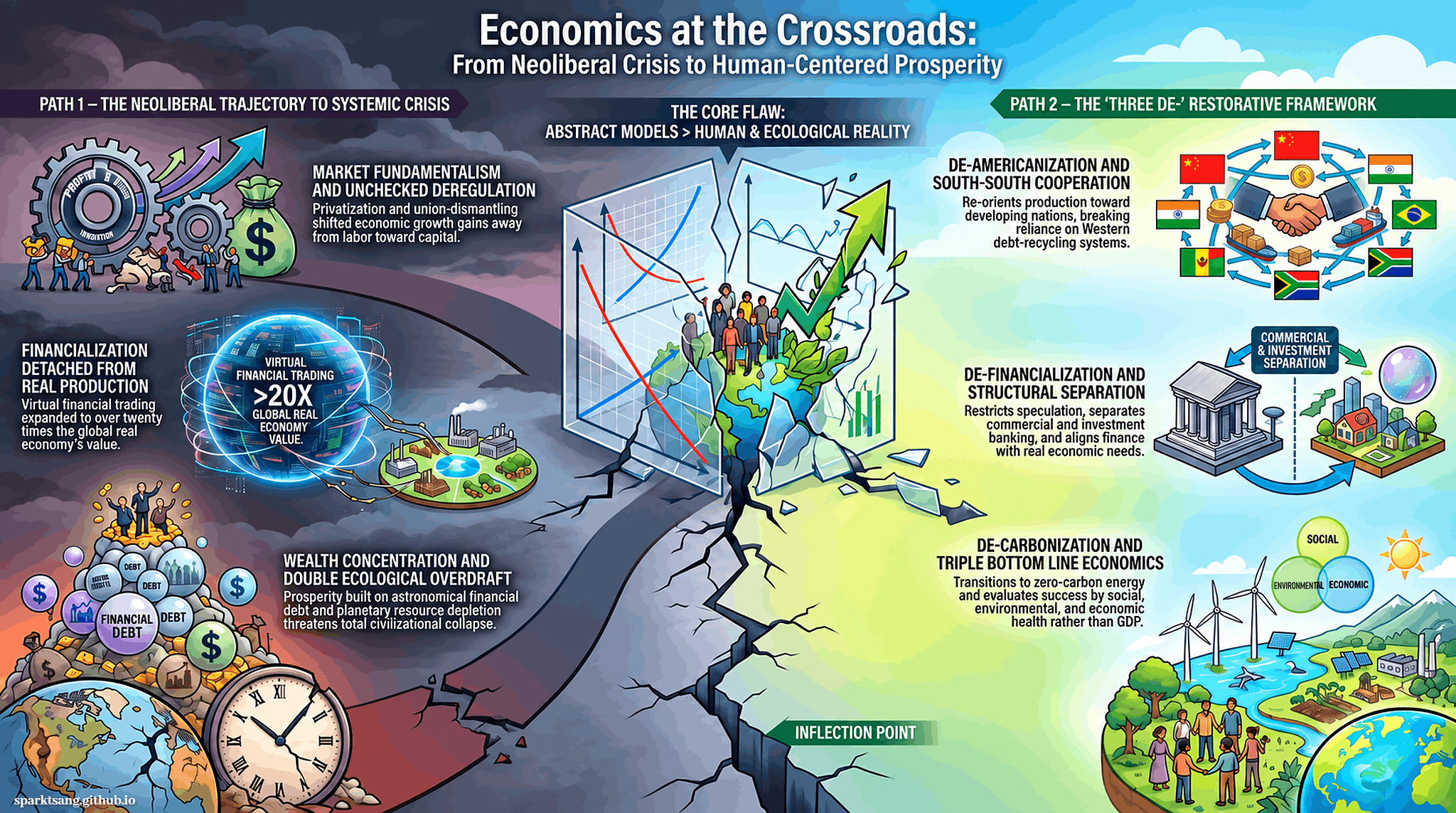
After the 2008 financial tsunami, what governments around the world have done amounts to little more than drinking poison to quench thirst. They have used money-printing and other financial tricks to conceal the impact of the tsunami—using a larger bubble to temporarily cover up the original bubble. Humanity must reflect on these problems from a historical and scientific perspective. The author proposes “three de-” measures and describes them as basic common sense: de-Americanization, de-financialization, and de-carbonization.
De-Americanization:
Americans, who account for less than 5 percent of the world’s population, consume 30 to 40 percent of the world’s resources. Huang Shudong’s The Rise and Fall of Great Powers—The Struggle over Development Paths in the Context of Globalization (2012) points out that Wall Street pulls global capital toward itself, causing the dollars paid by the United States for imports to circulate around the world and then return to the United States, allowing it to obtain the world’s goods for free, as though performing a magic trick. Economist Stiglitz likewise points out that when poor countries purchase low-yielding dollars with real money and hold them as foreign-exchange reserves, they are effectively transferring wealth to rich countries.
In the long run, poor countries can no longer depend on the United States. They must not only use domestic demand to drive economic growth but also promote South-South Cooperation, greatly increasing trade and commercial exchange among developing countries in the Global South. The rich countries of the North (Europe, the United States, and Japan) account for less than one-fifth of the world’s population. Indian economist C. K. Prahalad’s The Fortune at the Bottom of the Pyramid (2004) calls for changing the orientation of economic production away from serving the rich as its main purpose and toward serving the vast population of working people at the bottom of the pyramid.
De-financialization:
Finance has become excessively developed. On the eve of the tsunami, the virtual economy was twenty times the size of the real economy. It is depressing that The Stiglitz Report, a set of financial reform recommendations that took more than two years to prepare at the request of the United Nations, received little attention. The author’s “thought bombs” include:
-Restore the policies of the United States in the 1930s, strictly separate commercial banks from investment banks, and strictly limit the size of such financial institutions (to prevent them from becoming too big to fail).
-Impose a tariff on hot money—vast pools of short-term cross-border capital moving rapidly in and out of markets (the Tobin tax).
-Abolish central banks and have currency issued directly by the government.
-Restore a gold standard—or a currency standard based on a basket of valuables—rather than the dollar-based financial system, with the ideal solution being a world currency proposed by Keynes, which he called bancor.
In other words, the aim is to strike at finance in order to save the economy. Kevin Phillips’s Bad Money (2008) points out that throughout several hundred years of Western history, every declining hegemonic power has been accompanied by an increasingly pronounced trend toward financialization. Today the global economy has become integrated into a single whole; unless this trend is decisively countered, global economic decline is unavoidable.
De-carbonization:
The failure of the 2009 Copenhagen climate conference attracted little attention, and any government that introduces a carbon tax is bound to face opposition. People care only about today and ignore reality, pushing the world into extremely dangerous territory. Nicholas Stern’s research shows that the cost of decarbonization is roughly 1–2 percent of global GDP, whereas allowing carbon emissions to continue unchecked would cost more than 20 percent of global GDP.
Even imposing a carbon tax is insufficient to address the problem. We must move as quickly as possible toward a zero-carbon economy, dramatically improve energy efficiency, and develop renewable energy at full speed. A green economy built around decarbonization can create large numbers of jobs and help the global economy recover. See the United Nations Environment Programme (UNEP) and International Labour Organization (ILO), Green Jobs: Towards Decent Work in a Sustainable, Low-carbon World (2008), and Nicholas Stern, The Global Deal: Climate Change and the Creation of a New Era of Progress and Prosperity (2009).
[If choosing the most important and far-reaching economic event of the twentieth century, the author would choose neither the Great Depression of the 1930s nor the collapse of planned economies in the 1990s, but Nixon’s decision in 1971 to abandon the gold standard.
Since the Second World War, the dollar has depreciated by 95 percent, and issuing government debt has been one of the means of doing so. In 1985, the United States used the Plaza Accord to force the yen and the mark to appreciate. After the 2008 tsunami, it simply turned on the printing press. The foreign-exchange reserves of developing countries and Japan consist mainly of U.S. government bonds, and their greatest outlet has ultimately been investment in U.S. financial markets. The United States therefore uses this enormous system of “global deficit recycling” to absorb global capital for its own use.
But this game is unsustainable. In order to rescue their economies and counter U.S. quantitative easing, countries around the world have also started their own printing presses to prevent their currencies from appreciating. Extraordinary credit expansion will inevitably lead to severe inflation. At the same time, the vicious cycle of weak investment and consumer confidence leaves a huge risk of deflation. Violent alternation between inflation and deflation will plunge the world into chaos, and the poor countries and poor people who bear the least responsibility will suffer the most.]
Adam Smith introduced the concept of the invisible hand in The Wealth of Nations, and neoliberalists regard him as their founding father. But Adam Smith also wrote A Theory of Moral Sentiments (1759), arguing that conscience and the pursuit of justice are the foundations that sustain both markets and society. This is, in itself, a powerful rebuke to neoliberalists’ reduction of human beings to calculating machines.
The self-deceiving idea that “economics is concerned only with the application of objective laws and has nothing to do with value choices” must be corrected. Dividing knowledge into separate disciplines is merely convenient for research; knowledge is fundamentally one. Interdisciplinary integration will become the norm, and economics that ignores social factors should be discarded as worthless. The institutional economics promoted by John Kenneth Galbraith attempts to integrate the study of economic activity with political, social, and ecological change, and has achieved a certain degree of success. It may provide a starting point for rebuilding economics. Over the past half-century, numerous schools of Heterodox Economics have also emerged, including behavioral economics, Neo-Keynesian Economics, Complexity Economics, Evolutionary Economics, and Green Economics. See Robert Garnett and John Harvey, Future Directions for Heterodox Economics (2008).
Beyond theory, a number of civil-society organizations have also proposed concrete policy recommendations. Prominent examples include the United Kingdom’s New Economics Foundation and the United States’ Earth Charter Initiative. From a practical perspective, the Scandinavian Model offers a very useful point of reference, and we should study in depth whether it can be implemented successfully in other countries. The Latin American model also deserves careful study. The “China model,” by contrast, offers no useful inspiration and must be stopped before it reaches the brink.
The first step in rebuilding economics is to break free from the narrow GDP-centered view of economic growth. David Korten’s Agenda for a New Economy (2010) argues that humanity’s pursuit of Phantom Wealth conceals real wealth and has led civilization down the wrong path. The author also advances the following views:
-Establish a corporate accounting system based on the Triple Bottom Line—environmental, social, and economic benefits. See John Elkington, Cannibals with Forks: The Triple Bottom Line of 21st Century Business (1999), and Herman Daly and Joshua Farley, Ecological Economics: Principles and Applications (2010).
-Create an entirely new economic theory centered on social enterprises: social enterprises operate according to business models without making maximum profit their goal; their missions include serving customers and providing livelihood security for employees. See 2006 Nobel laureate Muhammad Yunus, Building Social Business (2010).
-Develop entirely new business theories and ways of thinking to serve people at the bottom of the pyramid.
-Reconsider the legal personality of corporations: as the General Motors example above shows, the moral responsibility of a corporate legal entity is ambiguous, making an already upside-down world even more upside down.
-Break free from the spell that says “no growth means recession,” and accept the possibility of a steady state of zero growth. See Tim Jackson, Prosperity Without Growth (2009). Once a person reaches adulthood, he or she enters a steady state of zero growth; the only thing that continues to grow indefinitely is cancer cells. The existing banking system also needs to be reexamined, including bold exploration of new financial ideas such as interest-free money, a full reserve banking, and regular trimming of money supply.
Two other ideas are worth considering: initiatives for deglobalization through local self-sufficiency, and the redistribution of power and wealth implied by global justice. See Paul Gilding, The Great Disruption (2011); Bill McKibben, Deep Economy (2008).
Countering the global environmental catastrophe still requires businesspeople and economists. Gernot Wagner, in But Will the Planet Notice? (2012), says that if we want to change the behavior of billions of people, only economists can propose concrete measures capable of turning the situation around.
It is imperative to open up another path distinct from both communism and financial capitalism. Economists have a heavy responsibility.
Keynes: “In the not-too-distant future, economics will return to its proper, subordinate place, and the things that will inspire our thoughts and feelings will be the truly important problems—the problems of life and human relationships, of creation, conduct, and religion.”
Further Reading
Selected Wikipedia entries:
Basic concepts
-Capitalism
-Criticism of Capitalism
-Marxism
-Socialism
-Economics
-Neoclassical Economics
-Criticism of Neoclassical Economics
-Keynesianism
-Monetarism
-Neoliberalism
-Neoconservatism
-Market Fundamentalism
-Market Failure
-Corporation
-Privatization
-Plutocracy
-Economic Inequality
-Poverty
-General Equilibrium Theory
-Business Cycle
-Rational Expectations
-Efficient Market Hypothesis
-Pareto Efficiency
-Public Choice Theory
-Coase Theorem
-Supply-side Economics
-Trickle-down Economics
-Welfare Economics
-Neocolonialism
-Dependency Theory
-Alter-globalization
-Heterodox Economics
-Behavioral Economics
-Triple Bottom Line
-Green Economy
Specific events / knowledge
-Great Depression
-Glass-Steagall Act
-Bretton Woods System
-Plaza Accord
-Enron Incident
-Sarbanes-Oxley Act
-Financial Crisis of 2007–08
-Goldman Sachs
-Alan Greenspan
-Dodd-Frank Wall Street Reform and Consumer Protection Act
-Washington Consensus
-International Monetary Fund
-Millennium Ecosystem Assessment
-Millennium Development Goals
-Global Warming
-World Economic Forum
-Global Justice Movement
-World Social Forum
-Occupy Movement
-Earth Charter Initiative
Recommended books not listed in the main text:
-Stuart L. Hart, Capitalism at the Crossroads (2010)
-David Orrell, Introducing Economics (2011)
-Michael Goodwin, Economix (2012)
-Jonathan Aldred, The Skeptical Economist (2010)
-Rod Hill & Andrew Myatt, The Economics Anti-Text (2010)
-David Boyle & Andrew Simms, The New Economics (2009)
-John Cassidy, How Markets Fail (2009)
-David Harvey, A Brief History of Neoliberalism (2007)
-Immanuel Wallerstein, World-Systems Analysis (2004)
-Giovanni Arrighi, The Long Twentieth Century (2010)
-David Harvey, The Limits to Capital (2007)
-Simon Tormey, Anti-Capitalism (2004)
-Raj Patel, The Value of Nothing (2009)
-Larry Elliot & Dan Atkinson, The Gods that Failed (2008)
-Will Hutton, Them and Us (2010)
-Chuck Collins, 99 to 1 (2012)
-Robert B. Reich, Beyond Outrage (2012)
-James Galbraith, Predator State (2008)
-Charles H. Ferguson, Predator Nation (2012)
-Bill McKibben, The End of Nature (1996)
-Richard Heinberg, The End of Growth Update (2012)
-Lester R. Brown, Plan B 4.0 (2009)
-James Hansen, Storms of My Grandchildren (2010)
-James Gustave Speth, The Bridge at the End of the World (2008)
-Elizabeth Kolbert, Field Notes from a Catastrophe (2006)
-Naomi Oreskes & Erik M. Conway, Merchants of Doubt (2010)
-William F. Felice, The Global New Deal (2002)
-Molly Scott Cato, Green Economics (2008)
-Jeffrey Sachs, The Price of Civilization (2011)
-John Raulston Saul, The Collapse of Globalism (2006)
-Joseph Stiglitz, Making Globalization Work (2007)
-Dan Rodrik, The Globalization Paradox (2011)
-Ha-Joon Chang, 23 Things They Don’t Tell You About Capitalism (2010)
-John Perkins, The Secret History of the American Empire (2008)
-David Korten, The Great Turning (2005)
-張翠容, The Road to Truth in Latin America (2009)
-丁學良, The China Model: For and Against (2010)
-黃樹東, The Rise and Fall of Great Powers; The Struggle over Development Paths in the Context of Globalization (2012)
Last updated: August 3, 2020
Lee exposes how orthodox economics and financial gatekeepers have trapped humanity in a destructive paradigm, calling for a radical system overhaul to save our future.
But how can we dismantle a rigged economic system if our society’s fundamental mechanism for determining truth is already captured by those same elites? Before we can rebuild economics, we must rebuild the foundation of knowledge itself. My philosophy proposes exactly this: a decentralized framework where systemic flaws can no longer be hidden by privilege, and truth is determined not by power, but by ruthless, open-source refutation.
Thank you for reading until the end. This is a bonus infographic just for you.