The Ghosts of the Ho Fah Hotel
2025-10-10
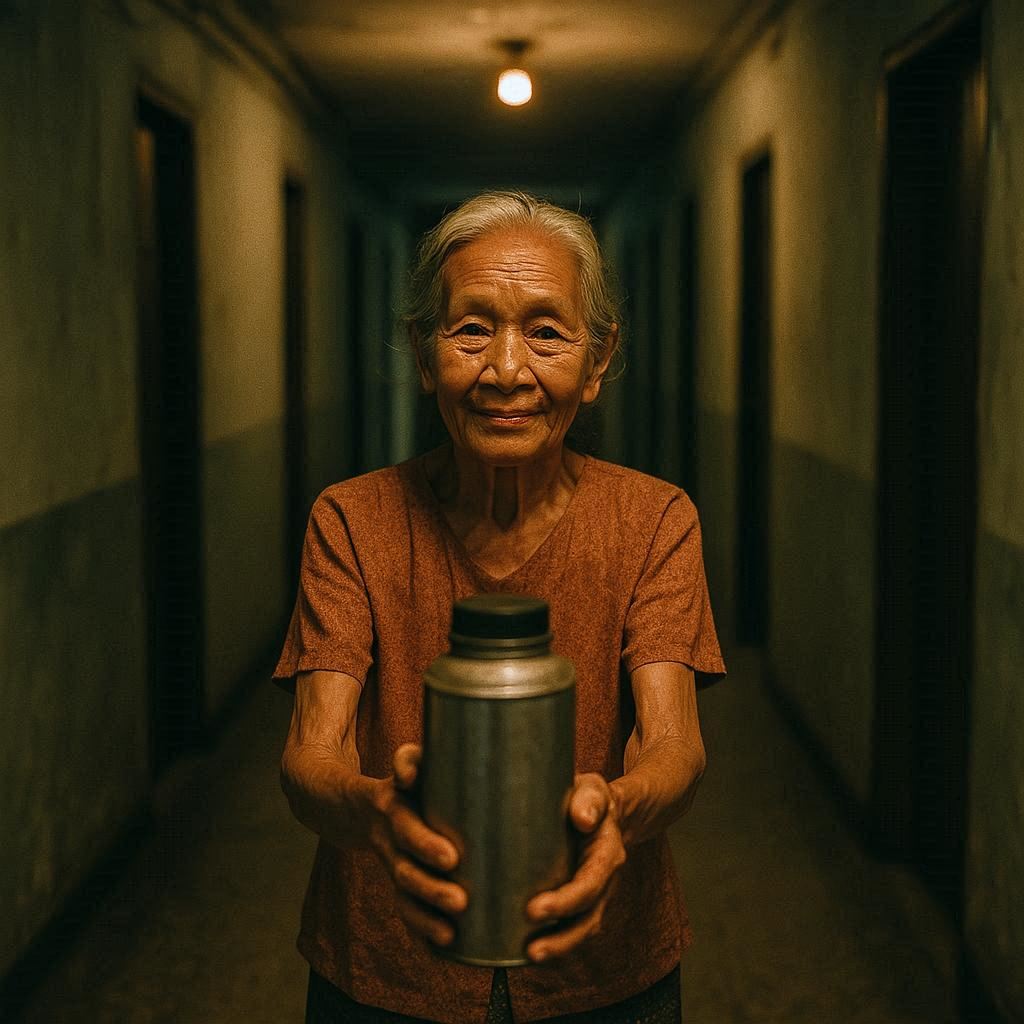
A month ago, after the adrenaline of the border fiasco, I craved a different kind of story. I took a train to Phatthalung, a town so far off the tourist trail that the concept of a “dorm room” doesn’t exist. The cheapest option was a private room, and my intuition told me to bypass the booking websites. I went straight to the source: the Ho Fah Hotel.
Just as I suspected, the walk-in price of 260 baht was cheaper than the online rate. The cheapest room had conveniently vanished from the booking sites overnight—a classic tactic to induce panic and upsell. My first victory was a small one.
The Ho Fah Hotel is a time capsule. The lobby is guarded by an ancient, boxy television set. The owners, a husband and wife well into their seventies, manage the entire operation. She speaks no English; he manages a few words. My attempt to negotiate a discount for a three-night stay was met with a simple, unarguable truth: “It’s already very cheap.”
He was right. Especially for what I was buying. My room was a perfectly preserved diorama of the 1980s. A chunky, rotary-dial-style telephone sat on the desk. The furniture, the worn terrazzo floor, the very air itself seemed untouched by the digital age. For 260 baht a night, I had bought a ticket to a bygone era. The irony of this thought was not lost on me.
But the past is an inconvenient country. There was no electric kettle. For a traveler who relies on coffee to start the day and sensitive tea to end it, this was a problem. Using a translation app, I explained to the old woman that for health reasons, I needed hot water. She disappeared and returned with a large thermos, indicating she would refill it for me whenever I needed.
And so, a ritual was born. Each morning, I would bring the empty thermos downstairs. She would take it, fill it with freshly boiled water, and bring it up to my room. One day, she knocked while I was showering. I emerged, awkwardly wrapped in a towel, to take the thermos. She broke into a hearty, unrestrained laugh. In that moment, we were not just a hotelier and a guest, but two humans sharing a moment of simple, funny absurdity.
The freshly boiled water was a luxury. It allowed me to brew my Japanese sencha at the perfect temperature, unlocking a delicate flavor that the tepid water from a standard water machine could never achieve. It wasn’t perfect—the water always carried the faint, herbal ghost of the medicinal teas she surely brewed for herself—but that imperfection only made the gesture more poignant. She was sharing her personal kettle, her personal medicine, with a strange foreign guest.
On the day before checkout, I saw her on the stairs, alone, cleaning the rooms for the entire five-story hotel. I realized with a jolt that there were no other staff. This whole grand, fading establishment was run by just the two of them. One to clean, one to guard the front desk. They could never be sick. They could never take a day off. They were prisoners in their own time capsule.
I gave the empty thermos to the man at the desk, but the hot water never arrived. I found the old woman on my floor and realized the message had not been passed. “He didn’t say anything,” the old man explained, unaware of the silent pact between us.
As I checked out, I handed her the key. I hesitated, then showed her the photos on my phone: a few dead cockroaches under the nightstands. I gestured that she should clean there. It was a gesture of goodwill, and she accepted it as such, smiling and nodding. “OK, OK.” As I turned to leave, I almost forgot the thermos still in my hand. She pointed it out, and it was my turn to laugh.
A wave of warmth washed over me as I walked away, but it was quickly enveloped by a much larger, colder tide of sadness. For three days, this old woman had sacrificed her personal thermos for me. She single-handedly maintained a five-storey hotel far too large for her, a task that was clearly overwhelming her. The two of them were trapped, night and day, in their 1980s dream, earning an income that, by Thai standards, likely placed them in the top 10%, but with no freedom to ever spend it. The money they earned would be inherited by someone who had likely never worked a single day in this hotel.
Suddenly, an image bloomed in my mind, cinematic and sepia-toned, like the final scene of Titanic. I was back in the 1980s. The Ho Fah Hotel was in its prime, everything gleaming and new. A vibrant, middle-aged couple, full of entrepreneurial fire, had just taken over. They greeted me with dreams in their eyes, showing off the state-of-the-art telephone and color TV in my room. “It’s worth every bit of the price,” they’d say with confidence, not the weary resignation of “it’s already very cheap.” Two smiling young maids stood by. “Have a beautiful stay, sir!” one of them would say in perfect, crisp English.
My heart sank. The only thing that pulled me back from the undertow of this melancholy vision was the memory of the old woman’s smile—a smile that was resilient, resolute, and without a trace of regret. She had accepted her fate, and still had enough grace left over to satisfy a strange guest, enough spirit to laugh at a man in a towel.
It’s just enough to make you not cry.